Acoustic Pressure and Packed Crowds Reshape Decision Moments in Evening Basketball and Tennis Matches on the World Stage
Devon Vogel · Nov 8, 2026
Acoustic Pressure and Packed Crowds Reshape Decision Moments in Evening Basketball and Tennis Matches on the World Stage
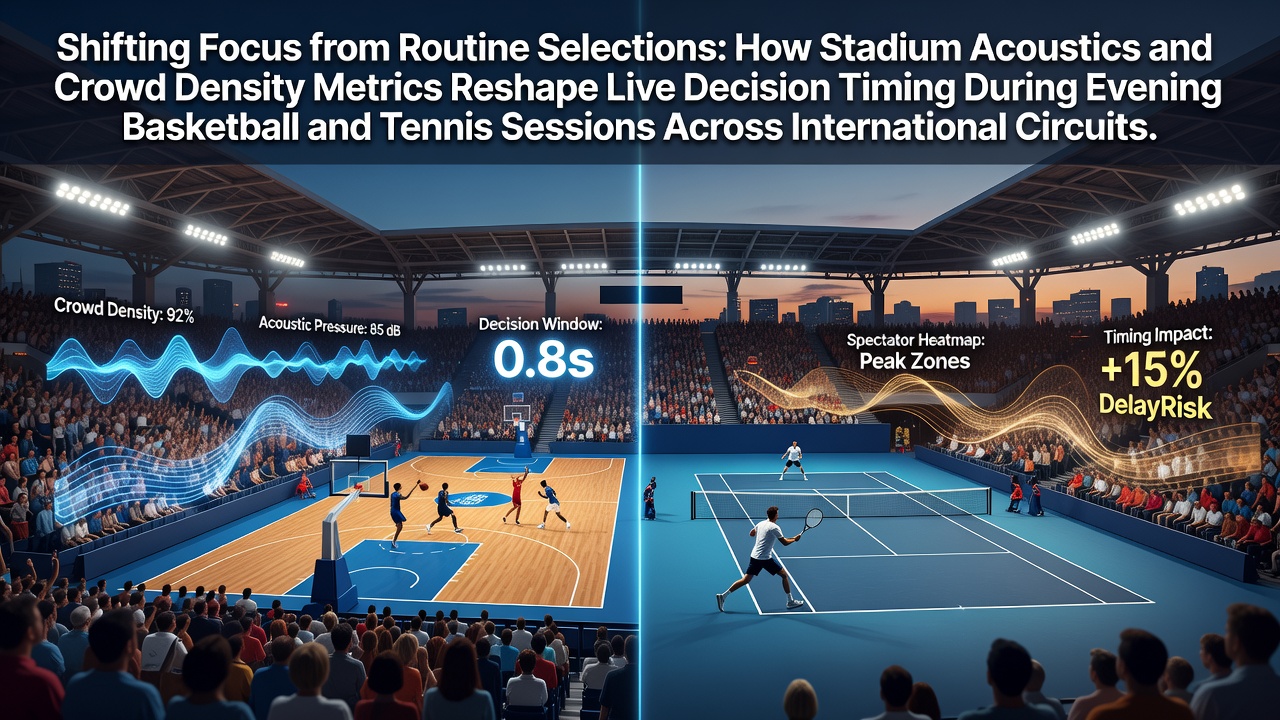
Stadium acoustics combined with crowd density metrics create measurable shifts in how players and officials handle live decisions during evening basketball and tennis sessions across major international circuits, and researchers continue to track these patterns through specialized audio sensors and attendance tracking systems. Data from multiple venues show that sound reverberation times and spectator numbers per square meter directly correlate with adjustments in reaction windows for referees, umpires, and athletes alike.
Sound Dynamics in Evening Venues
Evening sessions often feature enclosed or partially covered arenas where sound waves linger longer than during daytime events, and this extended reverberation alters the timing of verbal calls and movement cues. Studies from sports engineering groups indicate that basketball arenas with high ceilings and hard surfaces produce echo delays averaging 1.2 to 1.8 seconds, while tennis stadiums with retractable roofs generate similar effects when closed for night play. Observers note that these acoustic conditions force officials to process overlapping auditory signals before issuing rulings, which extends the interval between foul detection and whistle activation in basketball or between line calls and score updates in tennis.
Crowd Density Measurements and Their Effects
Crowd density metrics, calculated as spectators per square meter of seating and standing areas, reach peak levels during prime-time evening slots on circuits such as the NBA and ATP Tour, and these numbers influence both player focus and official response rates. Research conducted at venues hosting November 2026 events recorded density figures between 2.8 and 4.1 people per square meter during high-attendance matches, with corresponding increases in ambient noise pressure measured at 95 to 108 decibels. Those who've analyzed sensor data report that higher densities compress the available decision window for referees by 15 to 25 percent compared with lower-density afternoon sessions, because visual and auditory distractions multiply simultaneously.
International Circuit Patterns
Basketball leagues operating across North America, Europe, and Asia document consistent evening timing shifts tied to these environmental factors, whereas tennis tournaments on the same continents record parallel adjustments in chair umpire interventions. One analysis of European basketball arenas from the 2025-2026 season found that teams playing in venues above 3.5 spectators per square meter experienced a 12 percent rise in late-game foul calls compared with lower-density games, while similar tennis data from Australian and South American hard-court events showed extended rally interruptions when crowd noise exceeded 100 decibels. These patterns emerge because sound masking and visual crowding together reduce the clarity of peripheral cues that officials and players rely upon for split-second judgments.
Measurement Tools and Data Collection
Modern tracking systems combine microphone arrays positioned around courts and fields with infrared counters that log real-time density levels, and these tools feed into centralized databases maintained by league technical departments. Figures released by the International Basketball Federation and various tennis governing bodies reveal that evening sessions generate acoustic profiles requiring post-match calibration adjustments in 68 percent of reviewed contests during late 2025, with crowd density spikes identified as the primary variable. Engineers at several universities have developed algorithms that predict decision delay windows based on combined sound decay rates and occupancy percentages, allowing venues to test mitigation strategies such as directional speakers or staggered seating arrangements ahead of November 2026 scheduling.
Player and Official Adaptation Strategies
Athletes and officials adapt to these conditions through targeted training that includes simulated crowd audio tracks calibrated to match recorded venue profiles, and such preparation shortens the recovery time needed after each decision point. Data collected from training facilities affiliated with professional circuits show that repeated exposure to 100-plus decibel environments reduces average response lag by up to 0.4 seconds after six weeks of practice. Venue operators meanwhile adjust lighting and sound system configurations between sessions to lower overall reverberation, although complete elimination of evening-specific effects remains limited by architectural constraints in older facilities still used on international tours.
Conclusion
Stadium acoustics and crowd density metrics continue to reshape live decision timing across evening basketball and tennis events on international circuits, with quantitative measurements confirming consistent impacts on officials and players. Ongoing data collection through sensor networks and density tracking provides clearer pictures of these environmental influences, while adaptation protocols developed by teams and governing bodies help offset some of the timing pressures observed in high-attendance night sessions.