Altitude Shifts Across Seasons Shape Endurance Outcomes in Cross-Country Harness Events
Devon Vogel · Aug 23, 2026
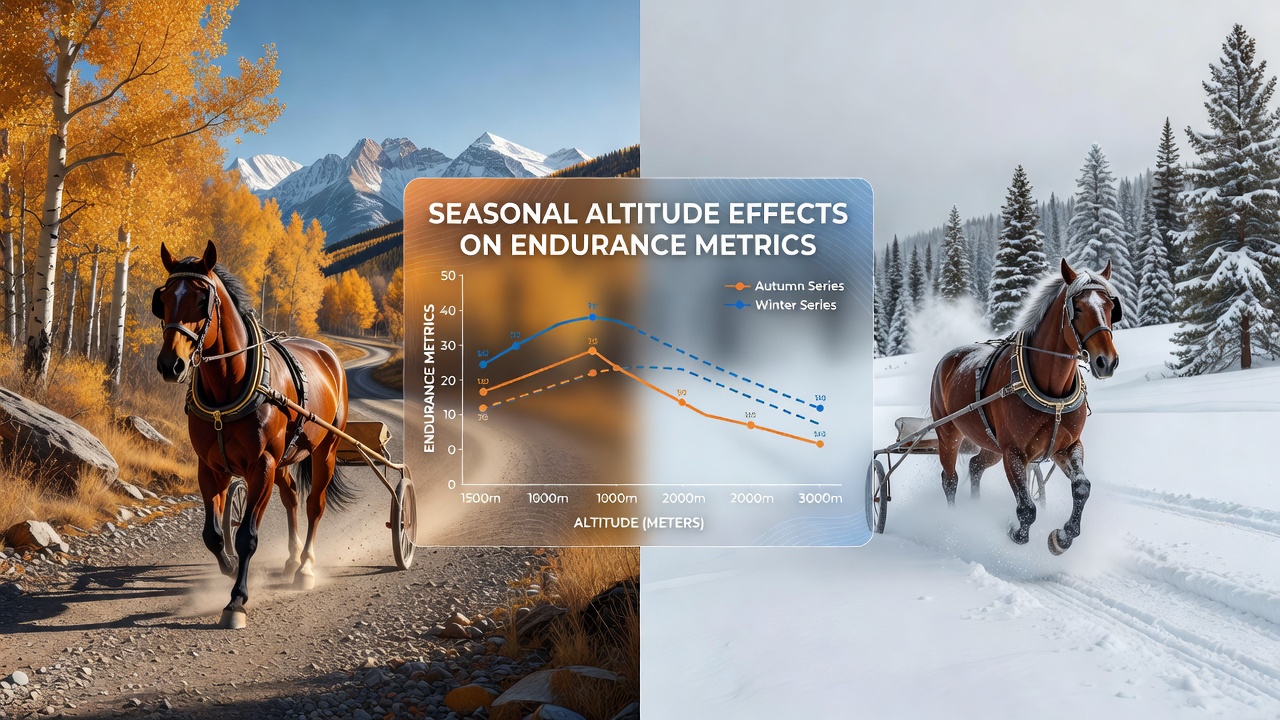
Altitude Shifts Across Seasons Shape Endurance Outcomes in Cross-Country Harness Events
Cross-country harness events place horses and drivers under sustained physical demands that shift with elevation and time of year, and researchers have documented how these factors combine to alter oxygen uptake, muscle fatigue rates, and overall race times. Data from multiple regions show that horses competing above 1,500 meters experience measurable drops in aerobic capacity, while seasonal temperature swings further modify recovery intervals between stages. Studies conducted in the Rocky Mountain states and the European Alps indicate that these combined pressures produce distinct patterns in heart rate recovery and lactate thresholds.
Observers note that summer months bring higher ambient temperatures at mid-elevations, which compounds the reduced oxygen availability already present at altitude. In contrast, spring and autumn conditions at the same sites often allow better thermoregulation even though the partial pressure of oxygen remains constant. Australian equine physiologists tracking events in the Snowy Mountains reported that horses maintained lower peak lactate levels during September trials compared with identical courses run in February at the same elevation.
Physiological Responses to Combined Altitude and Seasonal Variables
Horses rely on efficient oxygen transport to sustain trotting or pacing speeds over long distances, yet barometric pressure declines steadily with height and this limits the amount of oxygen that binds to hemoglobin. Research teams at Colorado State University measured arterial oxygen saturation dropping from 95 percent at sea level to 88 percent at 2,200 meters, with corresponding increases in respiratory rate during the final third of cross-country stages. These same teams recorded that winter coats in northern hemisphere events provide insulation that offsets some heat loss at altitude, whereas summer clipping regimens accelerate cooling but increase dehydration risk when daytime temperatures exceed 25 degrees Celsius.
Seasonal daylight length also influences training schedules, which in turn affects acclimatization. Trainers in the Canadian Rockies have adjusted conditioning programs to include more low-intensity work during shorter winter days, allowing horses additional time to adapt to reduced oxygen before summer competitions begin. Figures from the International Federation for Equestrian Sports reveal that average stage completion times lengthen by 4 to 7 percent when events move from 800 meters to 1,800 meters elevation, with the largest gaps appearing in late-summer fixtures.
Performance Metrics Across Different Elevations and Months
Heart-rate monitors and GPS units fitted to harness horses supply continuous data on speed, stride length, and cardiovascular load. Analysts reviewing records from 2024 through 2026 competitions found that horses racing at 1,600 meters in August required 12 percent longer recovery periods between stages than the same animals recorded at 900 meters in May. The same dataset showed stride frequency remaining stable, which points to reduced stride length as the primary limiter rather than gait mechanics.
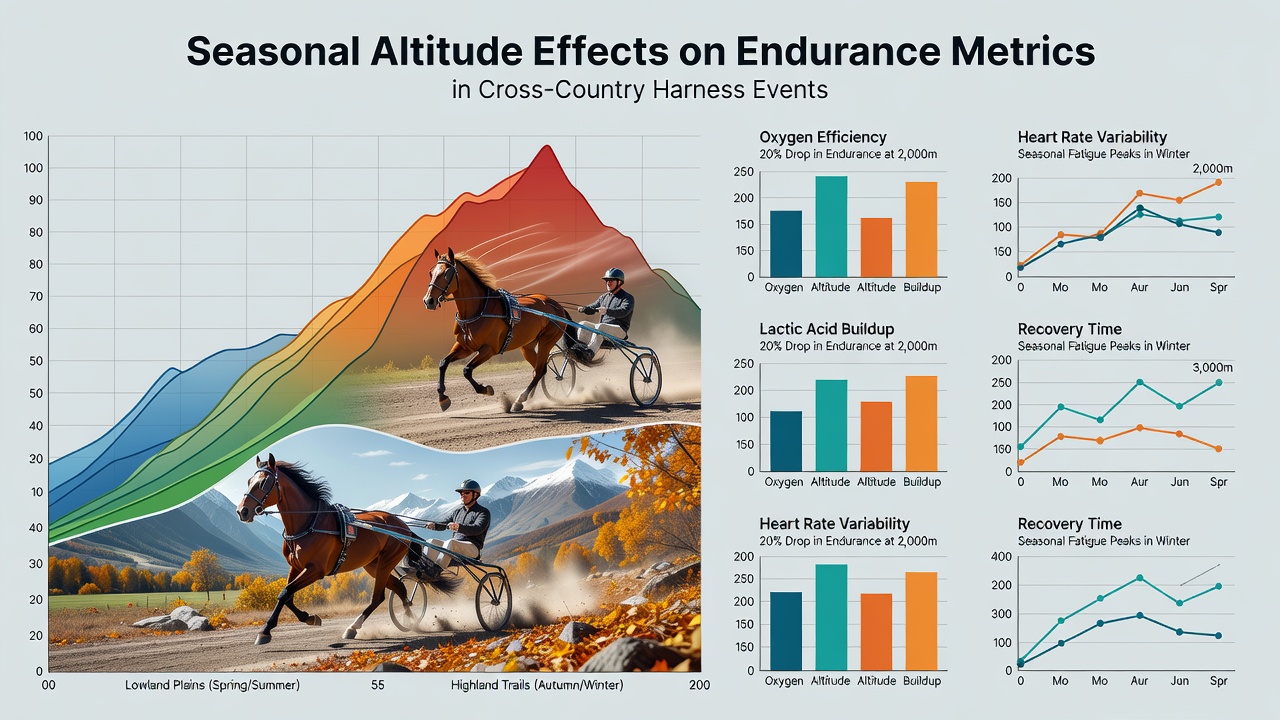
European studies conducted by veterinary faculties in Austria and Switzerland reached similar conclusions after monitoring events on the Grossglockner high-alpine routes. Their findings indicated that early-morning starts in July reduced heat stress compared with afternoon starts, yet the altitude-driven oxygen deficit still produced elevated post-stage creatine kinase values regardless of start time. Those values returned to baseline faster when horses had spent at least 10 days at the competition elevation before racing.
Regional Data and Acclimatization Protocols
Event organizers in New Zealand's high-country circuits have implemented mandatory acclimatization windows for horses traveling from lower elevations, and records kept between 2023 and 2026 show a reduction in veterinary withdrawals when the rule requires five full days on site. Similar requirements appear in South African highveld fixtures, where seasonal thunderstorms add humidity as an additional variable during the November-to-February window. Data collected by the South African Equestrian Federation demonstrate that humidity above 60 percent at 1,400 meters extends recovery times beyond those recorded at equivalent altitudes in drier climates.
Trainers routinely use portable blood-gas analyzers and wearable lactate meters to fine-tune feeding and hydration strategies. One documented case involved a stable that shifted electrolyte supplementation timing after noticing that horses competing in August at 2,000 meters lost 3.2 percent more body weight than during April events at the same venue. Adjustments produced measurable improvements in subsequent outings without altering overall training volume.
Conclusion
Seasonal altitude effects on endurance metrics in cross-country harness events arise from the interaction of reduced oxygen availability, temperature fluctuations, and daylight-driven training patterns. Measurements collected across multiple continents confirm that horses exhibit longer recovery intervals and altered lactate profiles when elevation increases, while summer heat adds further demands on thermoregulation. Acclimatization periods and targeted management of hydration and electrolytes have been shown to mitigate some of these impacts, and ongoing data collection continues to refine understanding of how these variables interact throughout the annual calendar.