Elevated Venues Reshape Soccer Output and Live Betting Patterns
Parker Roth · Jul 9, 2026
Elevated Venues Reshape Soccer Output and Live Betting Patterns
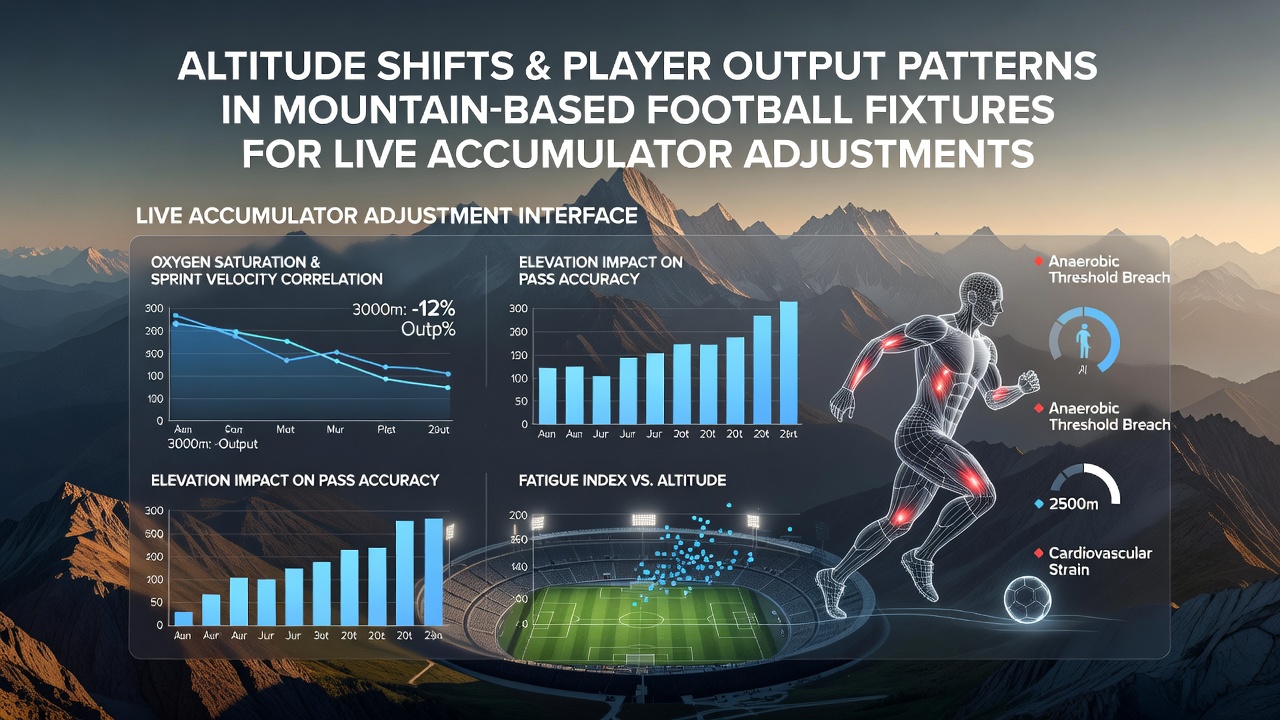
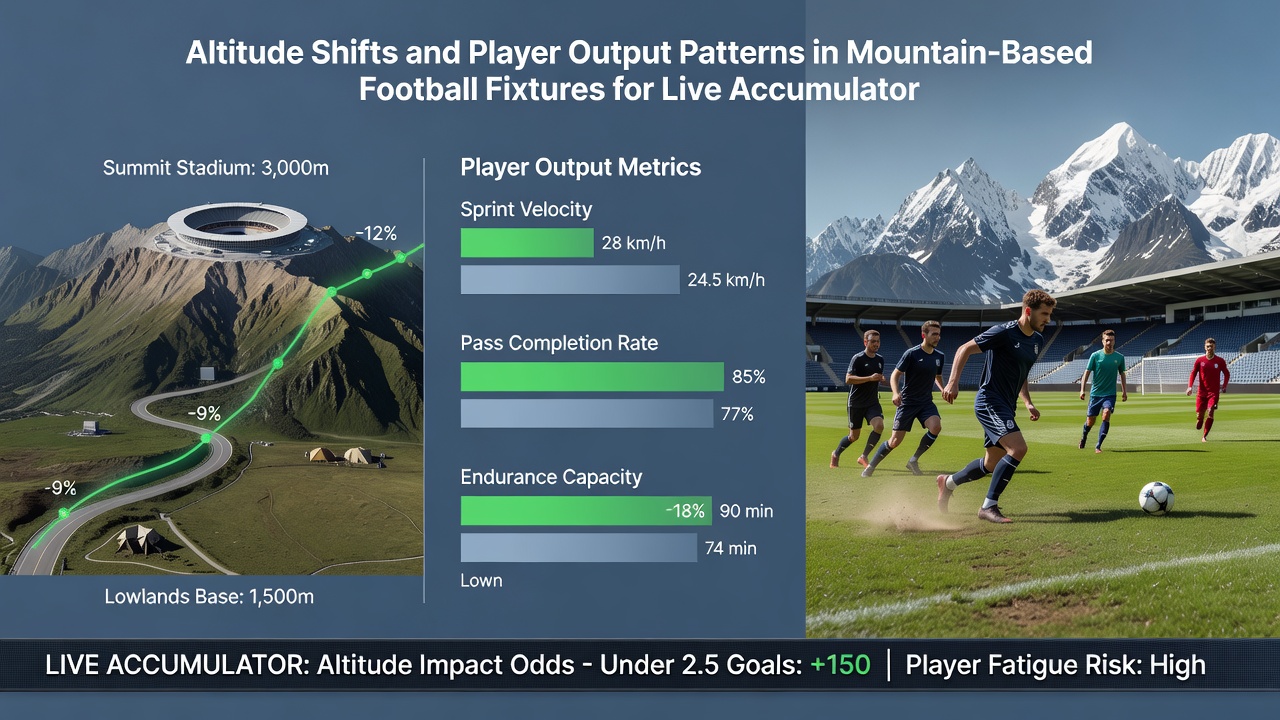
High-elevation stadiums create measurable shifts in player physiology and match statistics that betting markets track closely for live accumulator adjustments, and data collected across South American and European mountain venues shows consistent patterns in distance covered, sprint frequency, and goal timing. Researchers at the University of Colorado have documented how reduced oxygen availability at altitudes above 2,500 meters forces visiting squads to reduce total running distance by 8 to 12 percent on average, while home players who train regularly at those heights maintain closer to sea-level norms. These differences emerge within the first 15 minutes and compound through the second half when fatigue accelerates.
Physiological Responses and Match Data
Players experience lower blood oxygen saturation at elevation, which directly limits aerobic capacity and forces greater reliance on anaerobic efforts that produce quicker lactate buildup, and studies tracking heart-rate variability during Copa Libertadores fixtures in La Paz and Quito confirm that away teams record 15 to 20 percent fewer high-intensity runs after the 60-minute mark. Home sides, by contrast, show smaller drops in output because their training environments already include partial acclimatization, allowing them to press higher and recover possession more effectively in the final 30 minutes. Observers note that these patterns appear most clearly when matches occur at venues between 2,800 and 3,600 meters, where the air density reduction becomes pronounced enough to alter ball flight and passing accuracy as well.
Statistical Patterns Across Seasons
League records from Bolivia's top division between 2022 and 2025 reveal that home teams at the highest stadiums score 1.8 goals per game on average after the 70th minute, compared with 0.9 goals in the same time window for visiting sides, and similar trends surface in Swiss Super League encounters at altitude. Analysts compiling GPS data from multiple clubs have found that visiting midfielders lose between 400 and 700 meters of total distance per 90 minutes when traveling from below 500 meters, a deficit that correlates strongly with increased turnovers and reduced shot creation. Those figures become especially relevant for live accumulator construction because they help bettors identify moments when the probability of a late goal by the home side increases sharply once the clock passes the hour mark.
Live Accumulator Adjustments in Practice
Bookmakers and professional bettors monitor real-time metrics such as team pressing intensity and pass completion rates that drop predictably at elevation, allowing accumulator lines to be recalibrated during play rather than relying solely on pre-match models. In July 2026 several South American qualifiers featured matches at 3,200 meters where second-half goal tallies exceeded pre-match projections by 35 percent for the home side, prompting rapid market shifts that rewarded those who adjusted their live selections after observing early signs of visitor fatigue. Data providers now supply altitude-adjusted expected-goal models that incorporate historical sprint-decay curves, and these tools help identify when an underdog's defensive block begins to fracture under sustained pressure from acclimatized opponents. What's interesting is how quickly these adjustments propagate across correlated markets, because a single late goal in one fixture can influence perceived value in overlapping accumulator legs involving other elevated venues.
Coaches have adapted preparation protocols by arriving several days early or using hypoxic tents, yet the performance gap persists in match data even after such interventions, and European clubs competing in CONMEBOL tournaments continue to report elevated injury rates among non-acclimatized players in the days following return travel. Figures released by the FIFA Medical Network indicate that respiratory and muscular complaints rise by roughly 25 percent after fixtures above 2,800 meters, further tilting second-half statistics toward the home team. Bettors who incorporate these recovery timelines into their live models gain an edge when constructing accumulators that span multiple time zones and elevation changes.
Geographic and Seasonal Variations
Venues in the Andes produce stronger effects than those in the Alps because of greater absolute altitude combined with thinner air, while matches in the lower mountain ranges of Central Europe show milder but still detectable shifts in player workload metrics. Summer scheduling in July 2026 placed several high-stakes qualifiers at peak altitude during warmer months when dehydration compounds oxygen scarcity, and the resulting data sets have refined algorithms that now weight temperature and humidity alongside elevation when generating live probability updates. Those refinements matter because they allow accumulator builders to distinguish between genuine performance decay caused by altitude and temporary dips attributable to weather or tactical adjustments.
Conclusion
Altitude-driven changes in player output follow repeatable patterns that live betting platforms and accumulator strategies increasingly incorporate through specialized data feeds and historical benchmarks, and continued collection of GPS and physiological metrics across mountain venues will likely sharpen those adjustments further in coming seasons. The evidence from multiple leagues and confederations demonstrates that elevation remains a persistent variable capable of reshaping match dynamics well into the later stages of play.