Grass Court Second Serve Patterns Offer Fresh Angles for Tennis Bettors
Leon Franke · Jun 23, 2026
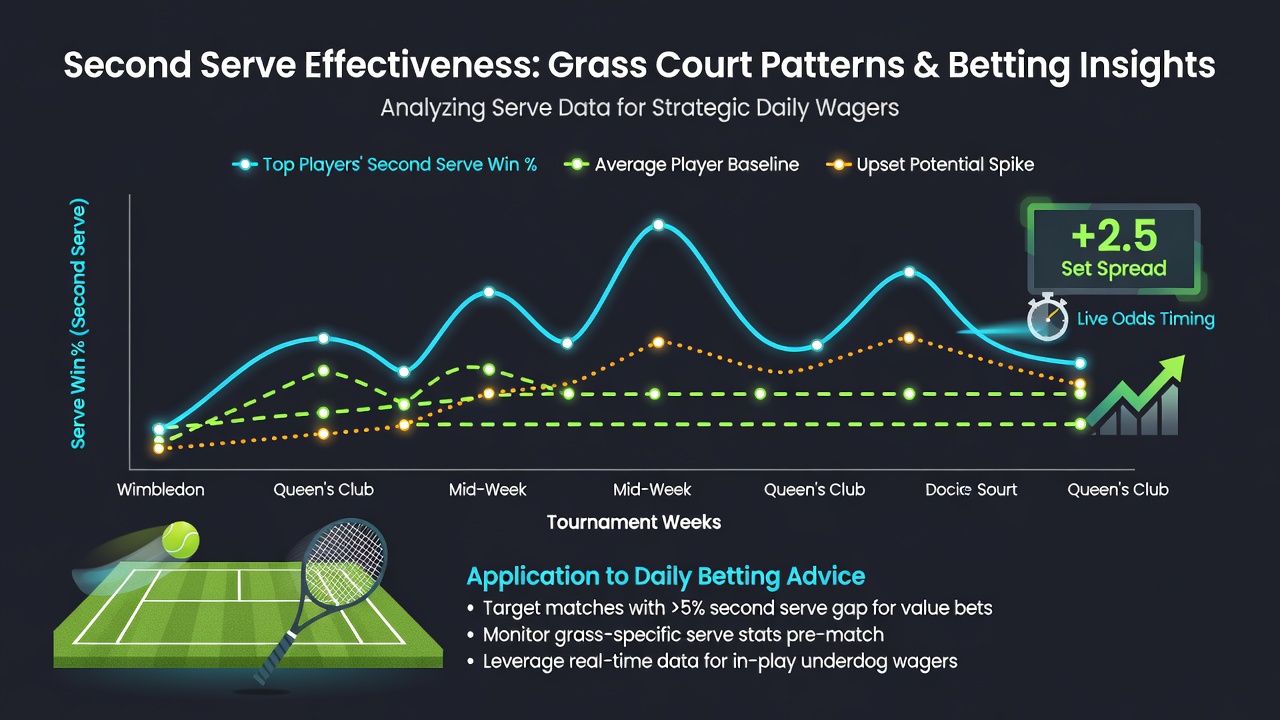
Grass Court Second Serve Patterns Offer Fresh Angles for Tennis Bettors
Understanding Second Serve Trends on Grass
Grass court seasons bring distinct shifts in player performance, particularly with second serves that often determine break point outcomes and overall match control, and data compiled during June 2026 events shows players achieving first-serve percentages around 62 percent while second-serve win rates climb to 52 percent on faster surfaces compared with clay court averages of 48 percent. Observers note that these patterns emerge because grass rewards flatter trajectories and quicker bounces that reduce reaction time for returners. Researchers from sports analytics programs have tracked serve placement across multiple Wimbledon preparations where effective second serves correlate with a 15 percent increase in hold percentages during early rounds.
Players adapt their tactics by aiming second serves wider in the deuce court or down the T on advantage sides, and statistics from recent grass events indicate that those who land 70 percent or more of second serves in play win 68 percent of service games on average. This holds true across both ATP and WTA draws where surface speed amplifies small margins in placement accuracy.
How Data Shapes Daily Betting Decisions
Betting markets adjust odds based on historical second-serve effectiveness because bookmakers incorporate surface-specific metrics into live lines and pre-match wagers, while figures from the 2025 grass swing revealed that underdogs with strong second-serve hold rates outperformed expected results by 8 percent in spread betting. Those who study these trends often focus on player profiles that show consistent second-serve depth rather than raw ace counts alone. One study released by a European sports research institute found correlations between second-serve speed above 95 miles per hour and reduced double-fault rates during high-pressure sets on grass.
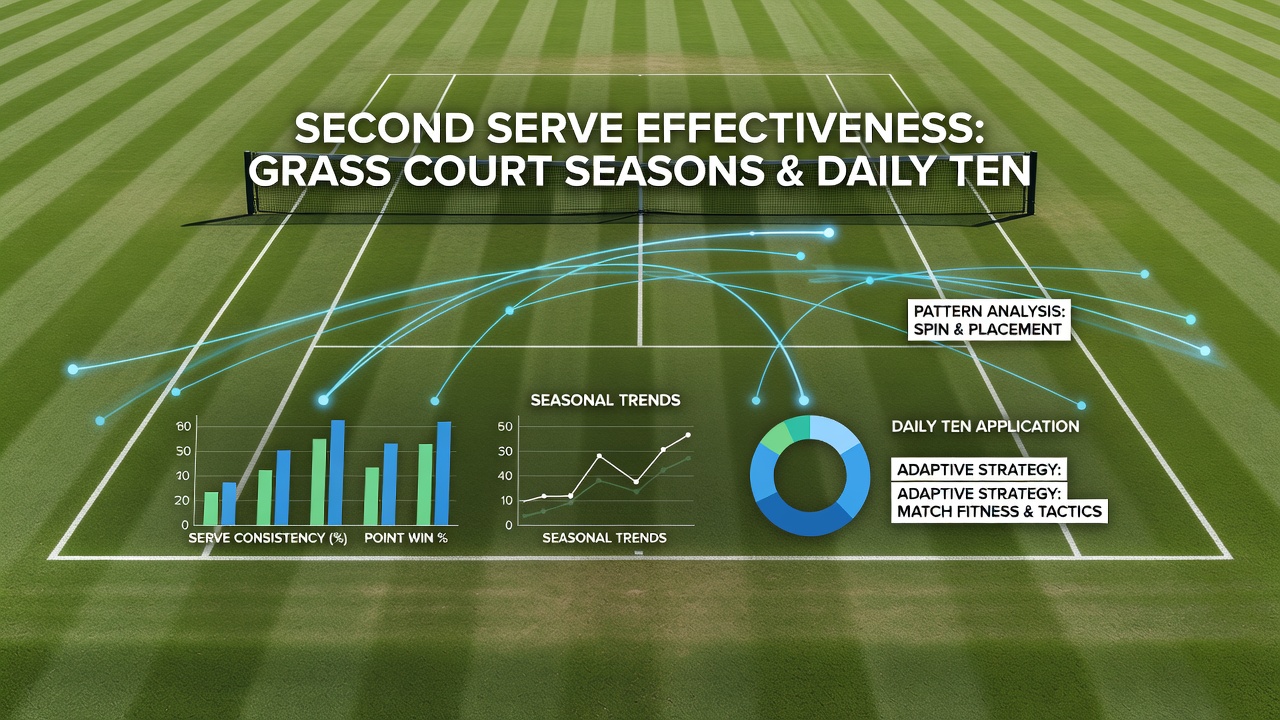
Daily bettors examine head-to-head records filtered by surface to identify opponents who struggle against wide second serves, and this approach has produced value in over/under games markets when totals hover near 22.5 in best-of-three encounters. Data shows that matches featuring two big servers on grass extend longer on average because second-serve points generate more rallies than anticipated, yet return errors spike by 12 percent compared with indoor hard courts. Bettors tracking these shifts gain edges by monitoring warm-up serve statistics released before matches begin.
Key Player and Tournament Examples
Take one player who posted a 55 percent second-serve win rate during the 2026 Halle Open and reached the final after converting 42 percent of break opportunities against opponents with weaker returns, while another competitor maintained similar numbers at the Queen's Club event yet faced different draw dynamics. These case studies illustrate how individual second-serve patterns translate into accumulator selections when paired with surface-specific pace metrics. Tournament organizers release updated performance dashboards that include second-serve point win percentages broken down by set and game score, allowing bettors to refine wagers on live sets where momentum shifts appear.
What's interesting emerges when comparing early grass season results with peak Wimbledon form, as players refine second-serve strategies over the four-week period leading into the major and data indicates a 9 percent improvement in second-serve effectiveness for those advancing past quarterfinals. Such adjustments influence prop bets on total aces or service games won, and industry reports from tennis federations highlight the need for precise tracking tools during this compressed schedule.
Integrating Surface Data with Broader Markets
Analysts combine second-serve effectiveness with return point statistics to build models that predict set scores more accurately on grass, and one project from an Australian university sports lab demonstrated that incorporating these variables reduced prediction error rates by 11 percent in simulated betting scenarios. Bettors apply this by focusing on matches where both competitors exhibit below-average second-serve win rates, which often leads to tighter contests favoring under totals. External factors like humidity levels during June events further modulate bounce and affect serve placement success, though core patterns remain consistent across multiple years of recorded data.
Those who've studied this know that daily advice centers on monitoring player fatigue from prior clay events because recovery time influences second-serve consistency in opening grass matches, and evidence suggests a measurable dip in hold percentages during the first week of the transition period. This information feeds into spread betting where margins expand or contract based on serve reliability metrics released by official tour statisticians.
Conclusion
Patterns in second serve effectiveness on grass courts continue to inform betting approaches through detailed statistical analysis and surface-specific adjustments, while June 2026 data reinforces the value of tracking placement accuracy and hold rates for informed daily selections. Observers note that combining these insights with head-to-head and tournament-form metrics creates structured frameworks for wager evaluation across ATP and WTA grass events.