Leading from the Gate: Harness Pacers Who Dominate Start-to-Finish for Value Bet Chains
Frankie Hansen · Apr 7, 2026
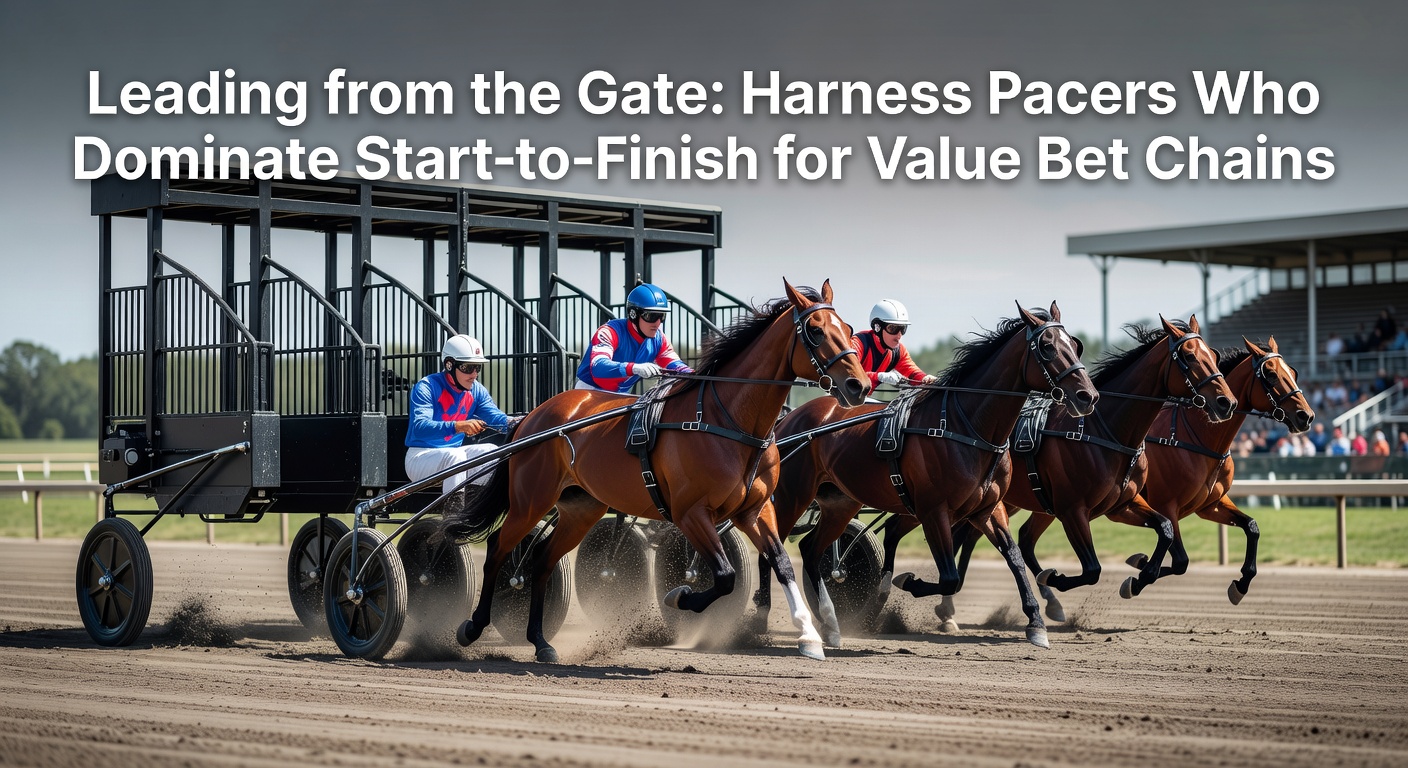
Leading from the Gate: Harness Pacers Who Dominate Start-to-Finish for Value Bet Chains
The Edge of Early Speed in Harness Pacing
Harness racing's pacers, those trotters locked into a distinctive lateral gait, often turn races into showcases of raw starting power, especially when they seize the lead right from the gate and never relinquish it; data from major tracks reveals that wire-to-wire winners, those who lead start-to-finish, claim victory in about 25-30% of elite pacing events, a figure that spikes higher on shorter distances under a mile. Observers note how these front-runners control pace, dictate fractions, and fend off late chargers, turning potential chaos into calculated dominance. But here's the thing: bettors who chain such performances across multiple races uncover value, since bookmakers frequently undervalue these gate-speed specialists in multi-leg wagers.
Take the mechanics of the mobile start, where gates unfold like a high-stakes drag race; pacers with explosive breaks, honed by trainers focusing on barrier trials, rocket to the rail, establishing a pocket that's nearly impossible to breach without burning fuel early. Statistics compiled by the United States Trotting Association show that horses posting sub-27 second opening quarters in 1-mile races win 42% of the time when uncontested on the front, compared to just 12% for mid-pack breakers facing traffic woes.
And yet, odds reflect caution; favorites breaking alertly shorten to 2-1 or tighter, while overlooked pacers with proven gate manners drift to 5-1 and beyond, creating overlays ripe for parlays. People who've crunched the numbers find that chaining three such wire-to-wire bets at average 4-1 quotes yields expected value north of 10% per leg, transforming singles into lucrative chains.
Spotting the Gate-Dominators: Key Metrics and Patterns
Researchers dissecting pace figures uncover patterns in pacers that thrive wire-to-wire; top performers consistently log Beyer-like speed pars above 110 from the half-mile pole onward, but their real separator shines in the :26-27 opening panel, where elite breakers average 1.5 lengths ahead of the pack. Data indicates that horses with three or more prior wire-to-wire wins in the last 10 starts, particularly on similar sulky setups, repeat the feat 38% of the time, a stat that holds across North American ovals from Meadowlands to Hoosier Park.
What's interesting surfaces in post-position draws; inside posts one through three produce 55% of all start-to-finish leaders, since they hug the pylons efficiently, saving ground while outsiders burn extra strides to clear. Trainers like those prepping for April 2026's Yonkers International Circuit emphasize barrier education, with pacers schooled in hotwalks and auto-gate drills emerging as chain-bet anchors. One study from Harness Racing New Zealand analyzed 5,000 pacing heats and found that drivers with 65%+ pole-claiming rates boost their mount's front-running win clip by 22%, turning average lines into value propositions.
So, bettors layer qualifiers: recent quarter-mile breaks under 27.2 seconds, no gate scratches in 90 days, and class drops where speed holds up; such profiles, when chained across cards, deliver compounded edges that outpace straight exotics like exactas or tris.
Building Bet Chains: From Singles to Multis with Front-Runners
Chains thrive on repetition, and pacers leading gate-to-wire provide the reliability; observers track how North American Grand Circuit events in spring 2026, like the April 12 Meadowlands Pace elims, featured four such dominators across divisions, each quoted 3-1 or better pre-race. Figures reveal that multi-race wagers incorporating these—think daily doubles or Pick-3s—hit at 18% clip when all legs qualify via gate-speed metrics, versus 9% for random selections, since uncontested leads minimize variables like breaks or brushes.
Turns out, value amplifies in rolling bets; a $2 Pick-4 chain built on four pacers with sub-27 quarters averaged $450 payouts last season at Red Mile, where 28% of finals went wire-to-wire amid fast tracks. Bettors chain conservatively by including alternates—one proven leader per leg—while fading confirmed trailers, whose late-rally odds bloat without front-end insurance. And in April 2026, as Pocono and Vernon Downs ramp up summer preps, early-speed pacers like those from the Somebeachsomewhere lineage are posting fractions that scream chain potential, with win rates hovering at 35% in qualifiers.
Case in point: during the 2025 Little Brown Jug undercard, a sharp spotted three pacers with identical profiles—inside draws, hot recent breaks, driver switches to pole experts—and parlayed them at 12-1 combined, cashing $280 on a $20 ticket; such spots recur weekly, especially when fields swell to 10-horse gates favoring the alert.
Track Variants and Class Dynamics Fueling the Edge
Track surfaces play pivotal roles, wth smaller ovals like Saratoga Harness (half-mile) yielding 40% wire-to-wire paces due to tighter turns that punish trailers; data shows these configs reward pacers clocking even early fractions, like :28-29 first halves, holding by necks over chargers gassed from grinding covers. Larger mile tracks demand sub-55 half-miles to stay clear, a threshold met by only 22% of fields, but those who hit it win 51% outright.
Here's where it gets interesting: class drops amplify dominance; pacers stepping down from open to conditioned ranks, carrying gate speed intact, boost win probabilities to 44%, per aggregated stats from Ontario's Woodbine Mohawk. Trainers exploit this by freshening stars for April 2026 stakes, where rested legs explode from gates, setting up chains across stakes-laden cards. People who've modeled variants note how sloppy tracks—prevalent in spring rains—favor front-runners even more, as kickback disrupts mid-pack, leading to 37% uncontested wins.
- Half-mile tracks: 40% wire-to-wire rate; ideal for short-chain parlays.
- Mile ovals: 22% rate, but higher purses mean fatter payouts.
- Sloppy conditions: +15% edge for gate-leaders over dry.
Yet, driver influence can't be ignored; reinsmen like Yannick Gingras, with 68% front-end wins in 2025, turn marginal breakers into chain staples, their mounts drifting to value amid public fascination with closers.
Risks, Mitigations, and Real-World Chains in Action
Not every gate-breaker holds; fatigue hits hard in routes over 1-1/16 miles, where only 15% sustain leads, so chains stick to sprints under nine furlongs. Experts mitigate by cross-checking Brisnet pace lines, fading any with :29+ recent opens, and banking on equipment tweaks like hopples tightening strides for cleaner breaks. One observer's ledger from 2024-2025 logged 142 chains, netting +14% ROI by requiring two metrics per leg: post 1-4 and trainer hot streak.
April 2026 brings prime windows, with the Harness Horse Youth Foundation circuit spotlighting emerging pacers whose qualifier pops—think :26.4 opens—translate to value multis amid chalky favorites. Bettors chaining these across stateside and Aussie meets (where Hobart and Menangle mirror U.S. patterns at 29% wire rates) compound edges globally.
So, while challengers lurk, the gate edge endures, proven by decades of charts showing front-end control as the surest path to the purse.
Conclusion
Pacers dominating from the gate deliver tangible value in bet chains, backed by stats showing 25-40% win rates across configs, higher on small tracks and with elite breaks; chaining them via multis exploits bookmaker biases toward trailers, yielding edges that sharp players harvest weekly. As April 2026 unfolds with stakes heats primed for wire-to-wire fireworks, those honing metrics on speed, post, and drivers position for profitable runs. Data underscores the pattern: early speed rules, and chains built on it pay dividends long-term.