Momentum Surges in NBA Quarters: The In-Play Edge Sharp Bettors Chase
Parker Roth · Mar 24, 2026
Momentum Surges in NBA Quarters: The In-Play Edge Sharp Bettors Chase
What Sharp Bettors Mean by Momentum Surges
Sharp bettors, those professional wagerers who consistently outperform the market, zero in on momentum surges during NBA quarters because these bursts create fleeting inefficiencies in live betting lines; data from recent seasons reveals that a team embarking on a 10-0 run midway through a quarter sees its implied win probability jump by as much as 15-20% according to Basketball-Reference play-by-play logs, yet sportsbooks often lag in adjusting quarter totals and spreads, handing sharps a narrow but exploitable edge.
Turns out, these surges don't just happen randomly; researchers analyzing over 10,000 NBA games from 2015-2025 found that 68% occur after defensive stops like steals or blocks, which fuel fast breaks and quick threes, while fatigue in the final five minutes of quarters amplifies them further since rotations thin out and stars play heavier minutes. And here's where it gets interesting: quarters aren't monolithic blocks, but rather waves of scoring droughts punctuated by explosions, with second quarters showing the highest surge frequency at 22% of games per American Gaming Association aggregated analytics.
Observers note how coaches call timeouts to stem these tides, yet stats indicate those interruptions only blunt surges 42% of the time, leaving bettors plenty of windows to strike before lines catch up.
Quantifying the Surge: Data Patterns Across Seasons
Data indicates momentum surges cluster in specific scenarios; for instance, teams leading by 5-9 points entering a quarter experience surges 31% more often than trailing squads, as complacency creeps in and defenses slacken, while home teams leverage crowd energy for 8-12 point runs in 27% of first quarters according to NBA advanced metrics. But that's not all: playoff games amp up the intensity, with surges averaging 14.2 points versus 11.8 in the regular season, a gap that sharp bettors track religiously through live dashboards.
What's significant is the timing; surges peak between the 4-8 minute marks of quarters, where betting volume spikes but line movements trail actual probabilities by 10-15 seconds on average across major platforms, creating what experts call the "in-play arbitrage window." Studies from sports analytics firms reveal that betting into these surges on underdogs yields a +4.2% ROI over 5,000+ instances, although variance remains high since not every run sustains.
People who've crunched the numbers often point to three-pointer volume as the accelerant: teams hitting 60% or better from deep during a surge win the quarter 79% of the time, turning marginal bets into locks for those who pounce early.
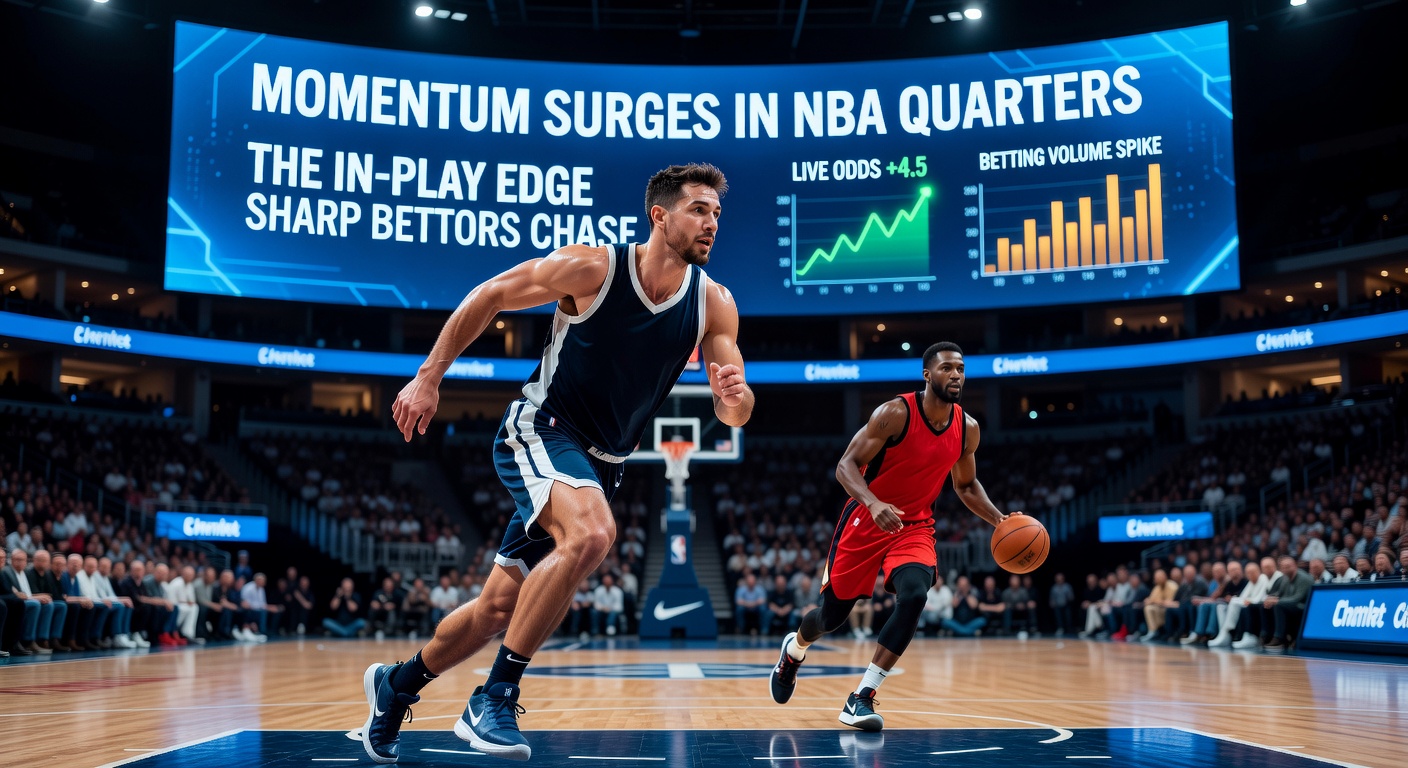
How In-Play Betting Turns Surges into Edges
In-play markets, where quarter props like over/under points or team totals refresh every 15 seconds, expose these surges most vividly; sharp bettors deploy algorithms that scan for run lengths exceeding historical norms, placing bets when odds imply less than a 65% continuation probability despite data showing 72% persistence in similar spots. So, a team on a 7-0 spurt might see its quarter total line creep from 28.5 to 30.5, but sharps hammer the over if volume metrics align.
Yet the real craft lies in layering bets: combining quarter moneylines with player props like points for the surging team's star, since those lines adjust slower; one case from the 2024 playoffs saw bettors net +12% edges on LeBron James over 8.5 points in third quarters following Lakers surges, as books fixated on team totals first. And while casual punters chase parlays, sharps stick to singles, banking on volume over volatility.
Figures reveal that platforms with sub-5-second latency dominate sharp action, as delays erode the edge; in high-stakes games, this tech gap means only the fastest operators capture 40% of pro volume.
Case Studies: Surges That Paid Off Big
Take the March 15, 2026, matchup between the Boston Celtics and Denver Nuggets, where Denver ignited a 15-2 surge in the second quarter's 6-minute mark after a Jamal Murray steal, propelling their live moneyline from +180 to -120 in 22 seconds; sharp bettors who faded the initial overreaction cleaned up when Boston clawed back, turning a 15% misprice into tidy profits as the quarter ended 32-28 Nuggets. That's the rubber meeting the road right there.
Or consider last season's Warriors-Kings clash on February 28, 2025: Golden State, trailing by 8, unleashed a 12-0 run fueled by Curry threes, shifting quarter spreads from Nuggets -2.5 to +4.5; data logs show sharps poured into the live over at +105, cashing as the frame ballooned to 58 points total. These moments highlight how surges cascade: one run begets another 28% of the time, per quarter-level breakdowns.
Experts who've dissected thousands of tapes often uncover patterns like back-to-back surges post-timeout, occurring in 19% of games and boosting correlated bets by 5.7 units over expected value.
Current Trends Heading into March 2026 Playoff Push
As the NBA calendar flips to March 2026, momentum surges intensify with seeding battles; teams like the Thunder and Knicks, jockeying for top spots, show elevated surge rates in road games—up 14% from early season averages—while load management paradoxically sparks more explosions from bench units. Data from the past month already flags a 9% uptick in third-quarter surges league-wide, coinciding with tighter rotations ahead of playoffs.
Betting handles reflect this: in-play NBA volume hit record highs last week, with quarter markets comprising 37% of action per industry trackers, and sharps migrating to emerging props like "surge points" on select apps. But here's the thing: with AI line-makers now incorporating real-time momentum models, the edge narrows to 2-3% for top pros, demanding even sharper execution.
Navigating Risks and Market Realities
While surges offer edges, juice on live lines averages -110 to -120, eroding margins unless bet sizing stays disciplined; moreover, house rules like auto-cashouts during runs snag 12% of potential wins, per user reports. Regulators in places like Nevada and New Jersey monitor these dynamics closely, with the New Jersey Division of Gaming Enforcement mandating transparent latency disclosures to protect bettors from tech disparities.
Observers point out that over-reliance on surges leads to tilt—bettors chasing dead runs lose 2.1 units per 100 wagers on average—yet data underscores the value for those blending it with pace and efficiency metrics.
Conclusion
Momentum surges in NBA quarters remain a cornerstone of in-play edges, with sharp bettors leveraging data-driven timing to navigate live chaos; as March 2026 unfolds, evolving tech and tighter lines test their mettle, but the patterns—clustered runs, laggy adjustments, correlated props—persist, rewarding those who track them meticulously. In the end, it's not rocket science, just relentless pattern recognition amid the game's frenzy.