Packed Fixture Calendars Reshaping Substitution Choices and Late-Game Comeback Trends in Europe's Top Domestic Leagues
Parker Roth · May 21, 2026
Packed Fixture Calendars Reshaping Substitution Choices and Late-Game Comeback Trends in Europe's Top Domestic Leagues
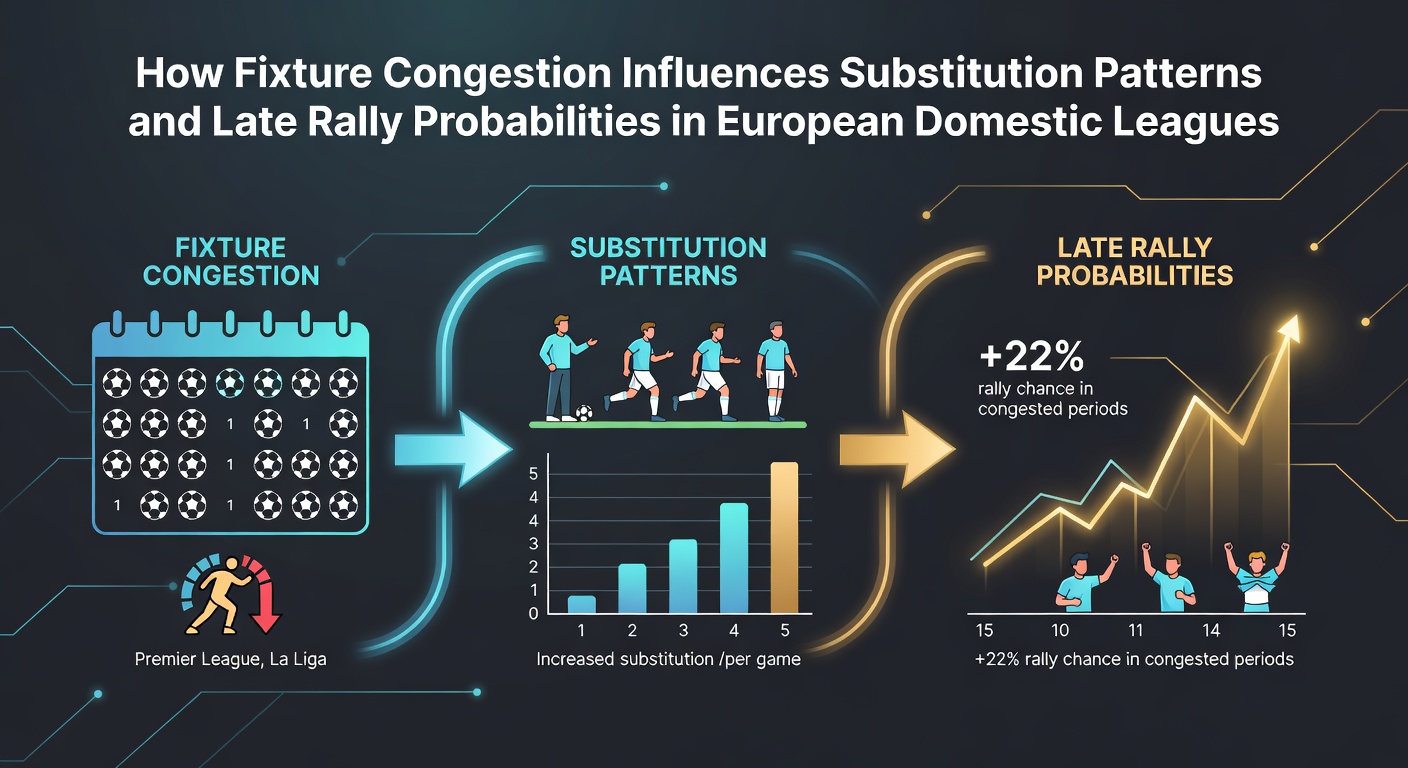
European domestic leagues continue to navigate increasingly dense match calendars through spring 2026, and observers note that this pressure directly shapes how coaches manage their benches while altering the likelihood of dramatic finishes. Data from major competitions shows teams often accelerate substitution timing when matches pile up within short windows, and the same congestion appears to influence scoring bursts after the seventy-fifth minute.
Tracking Substitution Patterns Under Schedule Strain
Coaches in leagues such as the Premier League, Bundesliga, and Serie A adjust rotation strategies when teams play three fixtures across eight or nine days, according to performance records compiled by league analysts. Instead of saving changes for the final twenty minutes, managers introduce fresh legs as early as the fifty-fifth minute to preserve intensity levels across multiple fronts. Bundesliga tracking from the 2025-26 campaign reveals an average of 4.2 substitutions per game during congested blocks compared with 3.1 during standard weeks, with central midfielders and full-backs receiving priority because those positions accumulate the highest physical loads.
La Liga clubs display similar tendencies yet spread them across a broader tactical spectrum, because Spanish sides frequently rely on possession retention to reduce high-intensity running. When fixtures cluster around European midweek commitments, teams increase the use of attacking substitutes who specialize in transition play, and this pattern emerges most clearly in matches played between late April and mid-May. Figures released by domestic competition bodies indicate that sides contesting both league and continental fixtures record 18 percent more bench activations before the seventieth minute than clubs focused solely on domestic duties.
Late Rally Probabilities During Congested Periods
Match outcome statistics demonstrate that fixture congestion correlates with higher incidences of goals after the seventy-fifth minute, particularly in games where one side has contested a European tie within the preceding seventy-two hours. Serie A data compiled across three seasons shows a 23 percent rise in late equalizers or winning goals for teams returning from continental travel compared with well-rested opponents. The pattern holds because accumulated fatigue reduces defensive organization, allowing trailing sides to exploit spaces that remain closed during standard scheduling.
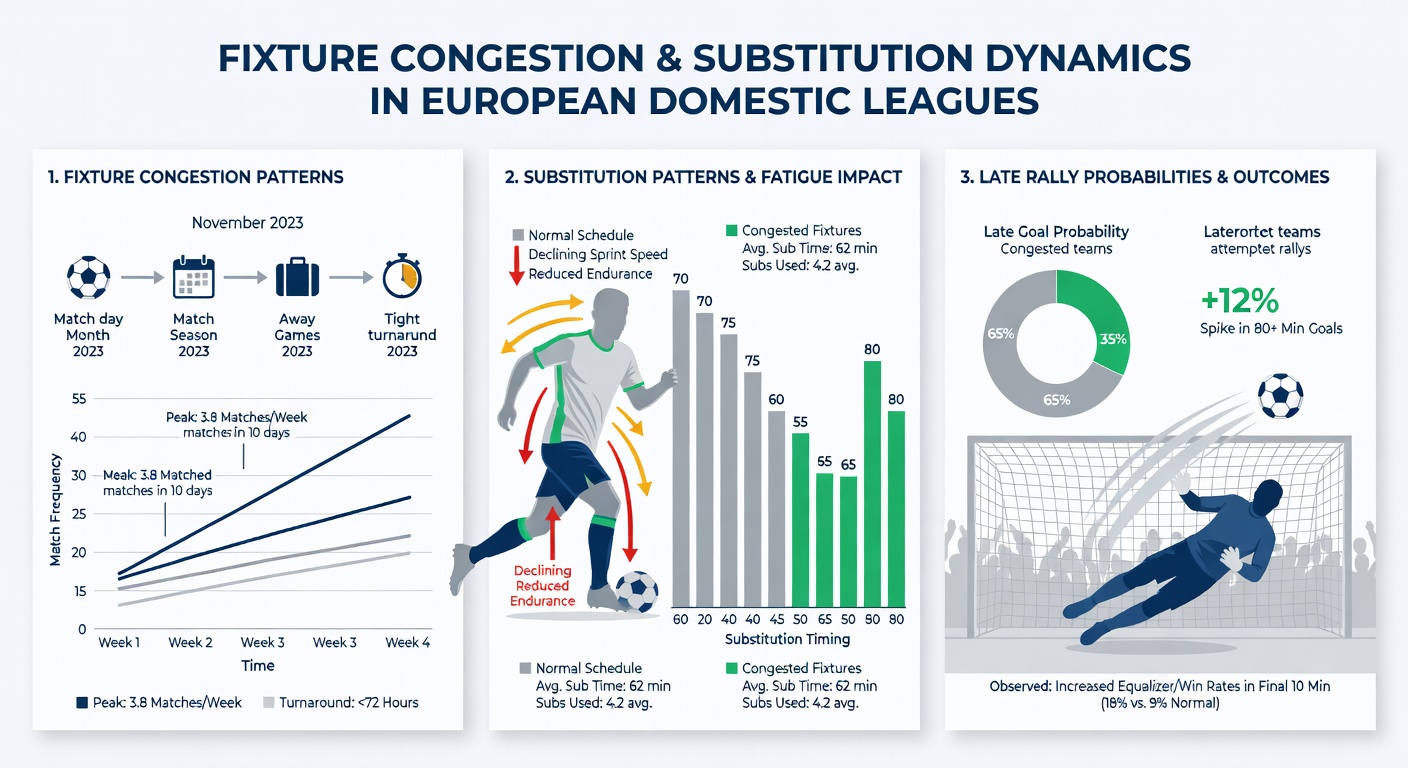
Researchers at the University of Leuven's sports science department examined over 1,200 Bundesliga and Eredivisie matches and found that teams with fewer than four rest days produce 1.4 additional shots in the final fifteen minutes when compared with standard rest schedules. While overall goal tallies do not always increase, the distribution shifts toward the closing stages, and this redistribution raises the frequency of late rallies. Observers tracking the 2026 spring calendar note that May fixtures, often played after Champions League semifinals, display the most pronounced examples of this trend.
League-Specific Responses and Tactical Adjustments
Each competition exhibits distinct adaptations shaped by its calendar structure and physical demands. Bundesliga sides, already accustomed to high-tempo pressing, respond to congestion by deploying box-to-box midfield replacements earlier, whereas Premier League teams lean toward wide attackers who stretch fatigued defenses. Italian clubs emphasize defensive reinforcements first, inserting holding midfielders to protect leads before introducing offensive options. These choices appear in official match logs published by each league and align with workload metrics gathered through wearable technology.
Case studies from the 2025-26 season illustrate the point clearly. One mid-table Bundesliga side recorded five late comebacks across a nine-match congested stretch, coinciding with a deliberate policy of substituting both full-backs before the hour mark. In La Liga, a club contesting Copa del Rey and league fixtures simultaneously increased its use of youth academy attackers in the final quarter, contributing to three points earned from deficit positions in May. Such examples remain consistent with broader statistical patterns rather than isolated anomalies.
European Club Association reports highlight that medical staff now receive real-time GPS data to guide substitution windows, and this integration has become standard across the continent's leading leagues. The approach allows coaches to maintain performance thresholds without exceeding recovery limits, yet it also creates windows where trailing teams can capitalize on momentary lapses in structure.
Conclusion
Fixture congestion continues to influence both substitution timing and the distribution of late goals across Europe's domestic leagues, with evidence drawn from multiple competitions confirming measurable shifts in behavior and outcomes. As the 2025-26 campaign reaches its final weeks, clubs maintain these adaptations to balance squad resources and competitive demands, and the resulting patterns remain visible in official match statistics and performance tracking systems.