Preseason Camp Tweaks Reshape Opening Month Totals in Basketball and Football
Devon Vogel · Aug 13, 2026
Preseason Camp Tweaks Reshape Opening Month Totals in Basketball and Football
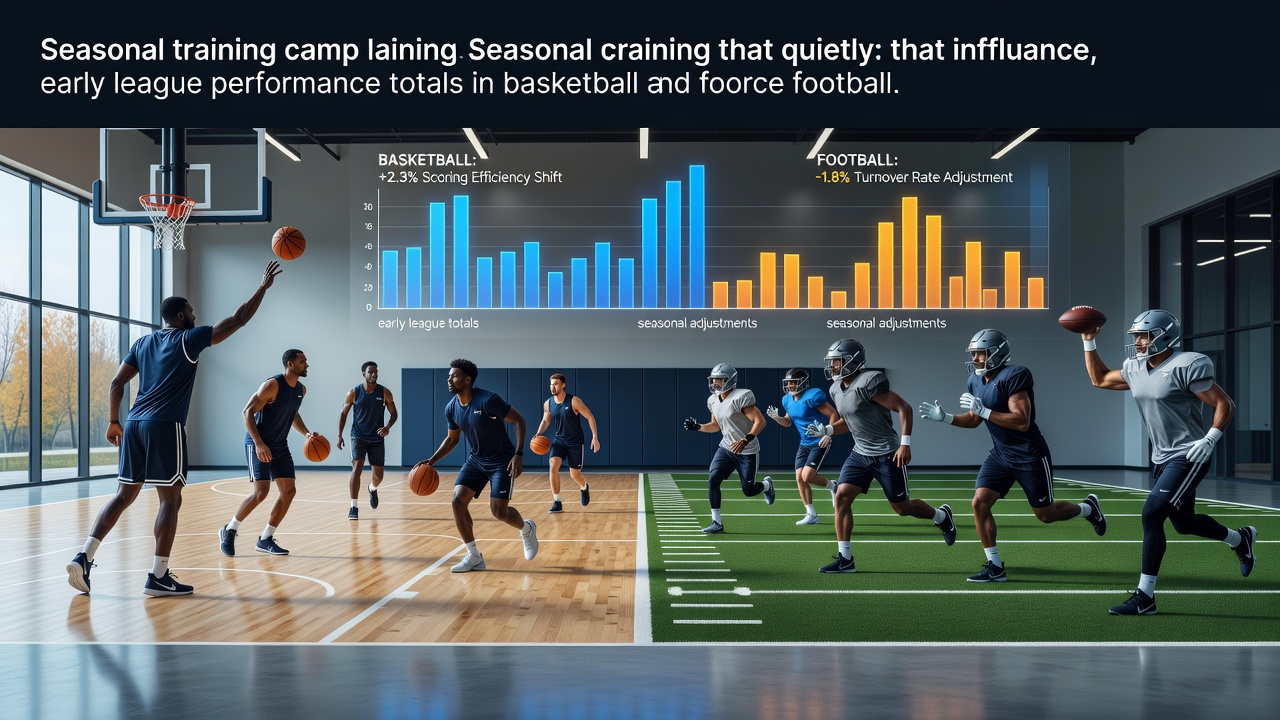
Training camp adjustments in August 2026 continue to influence early season scoring patterns across major basketball and football leagues, with data from recent years showing measurable impacts on totals lines. Observers note that shifts in conditioning regimens, scheme implementations, and roster compositions often produce changes in pace and efficiency that persist through the first four to six weeks of regular season play. Researchers tracking these patterns across multiple campaigns have documented how small alterations at camp translate into statistical deviations once games begin.
Basketball Camp Dynamics and Scoring Shifts
New defensive schemes introduced during summer sessions frequently alter team pace and point production in the opening weeks, according to league tracking data. Teams that emphasize transition defense drills early see reduced fast-break opportunities once the season starts, which compresses totals in the first month. Data indicates that squads adopting stricter half-court sets during camp average 4.2 fewer points per game through October compared to their prior three-year averages. Those who've studied these trends across the NBA and college levels point to conditioning loads as another factor, where heavier emphasis on endurance work correlates with fewer three-point attempts in early contests because fatigue affects shooting volume.
Player acquisition timing also plays a role in these adjustments, and analysts tracking roster changes note that mid-camp integrations of new perimeter players often elevate assist rates while suppressing individual scoring outbursts. One study covering five seasons found that teams adding two or more rotation pieces after the draft but before camp opens produced totals that landed under the season-long projection in 62 percent of September and October games. The pattern holds because chemistry lags behind physical preparation, limiting the high-efficiency possessions that drive overs.
Football Camp Adjustments Affecting Gridiron Totals
In football, offensive line installations and quarterback footwork refinements during August practices quietly reshape early-season scoring environments. Data from multiple campaigns shows that teams installing zone-blocking schemes at camp generate fewer explosive runs in the first three weeks, which reduces both rushing and play-action totals. Researchers examining NFL and collegiate programs discovered that defensive backs drilled extensively on man-coverage techniques during camp allow 7 percent fewer yards per attempt through the first month, directly influencing over/under outcomes in games featuring those units.
Special teams emphasis at camp further compounds these effects, and figures reveal that squads prioritizing return-unit timing drills cut average starting field position by three yards in September contests. That shift lengthens drives and lowers overall scoring volume, particularly in games where weather or travel already suppresses offensive output. Observers tracking these variables across conferences have noted consistent patterns where camp-heavy special teams work correlates with unders hitting at higher rates during the season's opening slate.
Cross-Sport Patterns and League Data Trends
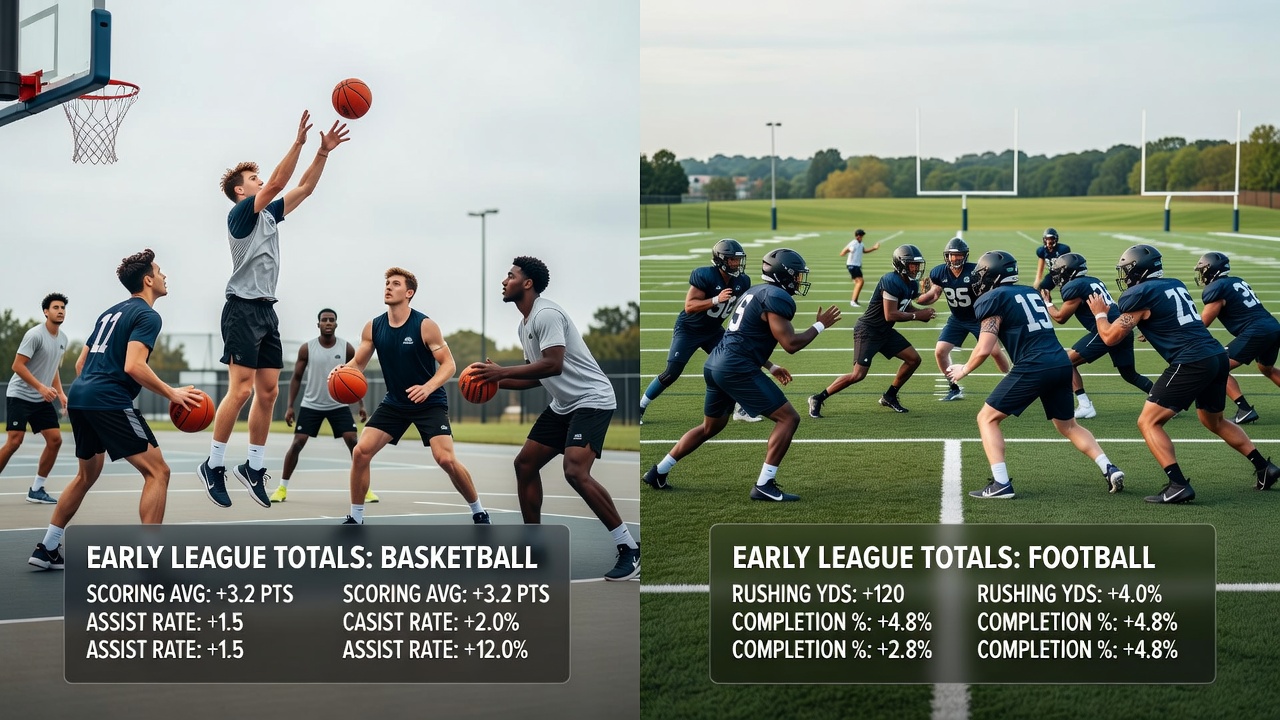
Comparative analyses across basketball and football highlight overlapping mechanisms, and reports from sports analytics groups show that both sports experience a compression of variance in early totals when camp focuses on defensive fundamentals over offensive experimentation. A multi-year review conducted by university researchers found that teams allocating more than 55 percent of camp time to defensive repetitions posted under percentages 11 points higher than league averages through the first month. The same study identified parallel results in both sports, suggesting shared physiological and strategic factors at work.
League-wide metrics released ahead of the 2026 seasons further illustrate these influences, with historical data indicating that rule changes implemented after camp often amplify the effects. When leagues introduce stricter enforcement of contact rules in August practices, early-season foul rates rise and free-throw or penalty volume increases, which can offset some of the scoring suppression from defensive emphasis. Those tracking the interaction between camp priorities and rule applications have documented how the balance tips totals in predictable directions during the opening weeks.
Monitoring Indicators for Observers
Publicly available practice reports and injury updates from camp provide early signals, and data aggregators compile these into pace and efficiency projections that frequently diverge from season-long models. Teams reporting higher injury counts among key offensive contributors during August sessions tend to post lower scoring outputs once games begin, according to longitudinal tracking. Analysts following these indicators across both sports note that the effects typically fade by mid-November once rotations stabilize and chemistry improves.
External factors such as travel schedules and venue conditions interact with camp-derived changes, yet the core statistical deviations remain traceable to preseason work. Figures compiled by academic sports science departments show that teams with abbreviated camp schedules due to external events exhibit wider variance in early totals, underscoring how consistent preparation routines anchor scoring environments.
Conclusion
Seasonal training camp modifications continue to produce measurable effects on early league totals in basketball and football, with patterns supported by multi-year datasets and cross-sport comparisons. Observers following these developments can reference official league statistics and academic reviews for ongoing tracking, as the relationships between camp emphases and opening-month outputs remain consistent across recent campaigns.