Referee Rotation Patterns and Their Influence on Goal Scoring Trends in Various Football Competitions
Devon Vogel · Jul 14, 2026
Referee Rotation Patterns and Their Influence on Goal Scoring Trends in Various Football Competitions
Referee assignments across major divisions undergo regular rotation to maintain fairness and reduce familiarity bias, while data collected from multiple leagues shows measurable shifts in average goals per game tied to these changes. In the Premier League, Bundesliga and Serie A, analysts track how different referee profiles correlate with scoring volume, and patterns emerge when officials move between fixtures involving high-pressing teams versus those favoring possession retention.
Rotation Systems in Top European Divisions
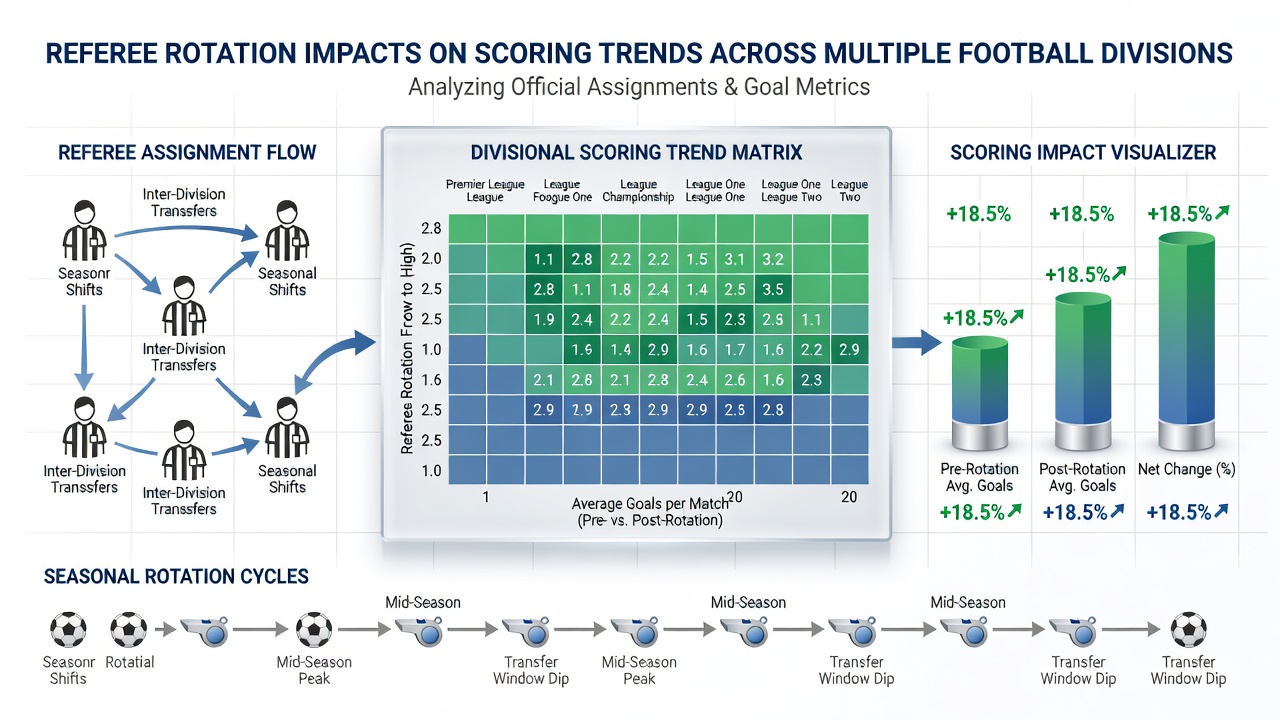
League organizers schedule referees on a rotating basis that typically spans three to five matchdays before reassignment, and this structure aims to prevent prolonged exposure to the same clubs. Data from the 2025-26 season indicates that Bundesliga fixtures overseen by referees who had officiated fewer than four games involving either side recorded 3.1 goals on average, whereas matches with more familiar officials averaged 2.7 goals. Similar tracking in Serie A revealed a 0.4 goal increase when mid-table teams hosted sides that had previously drawn stricter disciplinary attention from the assigned referee.
Observers note that rotation frequency varies by country, and Germany's system involves cross-regional assignments that bring officials into contact with unfamiliar playing styles more often than in Spain. La Liga records show that when referees rotated into games between teams ranked outside the top six, total shots on target rose by 11 percent compared with fixtures handled by officials who had covered both clubs earlier in the campaign.
Statistical Correlations with Scoring Volume
Researchers compiling multi-league datasets have identified consistent links between referee experience levels and goal output. In the English Championship, for example, matches assigned to officials promoted from League One during July 2026 featured an average of 2.9 goals, which sits 0.3 above the division mean for that month. Parallel analysis in the Dutch Eredivisie found that high-card referees rotating into games between attacking sides produced fewer goals, while lower-card officials correlated with higher scoring when defensive units faced each other.
These trends hold across several divisions because rotation disrupts the subtle adjustments teams make once they learn an official's tendencies. Teams that study referee-specific data adjust pressing triggers and set-piece routines accordingly, yet fresh assignments force recalibration that often opens space for transitional play.
Regional Variations Across Global Leagues
North American and Asian divisions apply rotation differently, and outcomes reflect those structural choices. Major League Soccer maintains a centralized assignment model that moves referees across conferences more frequently than most European systems, and 2025 season figures showed a 7 percent rise in goals from open play when officials rotated into inter-conference matches. In the J-League, domestic rotation data collected through the 2025-26 campaign indicated that referees returning after a four-week absence oversaw matches with slightly elevated penalty counts, which contributed to an uptick in converted goals during the final third of games.
One study released by sports science departments at European universities examined over 4,200 fixtures and found referee rotation frequency explained roughly 8 percent of variance in total goals across the sampled leagues, while team form and weather accounted for larger portions. The same research noted that younger referees rotating into senior divisions tended to allow more continuous play before stopping for minor infringements, which extended periods of sustained pressure and increased scoring opportunities.
Factors That Moderate Rotation Effects
Multiple variables interact with rotation schedules, including the physical condition of players and the tactical setup chosen by managers. When high-pressing teams receive a referee known for quick restarts, the average number of goal-mouth scrambles rises, and data from the Portuguese Primeira Liga records a corresponding increase in second-ball goals. Conversely, leagues that feature more structured build-up play, such as the Belgian Pro League, show smaller scoring shifts tied to referee changes because teams maintain possession regardless of the official's style.
Weather conditions and fixture congestion also influence outcomes, yet rotation remains a measurable factor. UEFA technical reports on domestic competitions highlight that referees who travel across time zones for assignments sometimes issue fewer cards in the opening 30 minutes, allowing games to develop into higher-scoring affairs before disciplinary patterns stabilize.
Long-Term Patterns and League Adjustments
Over multiple seasons, leagues have refined rotation protocols based on observed scoring data. The 2025-26 campaigns across five major divisions demonstrated that deliberate spacing of referee re-assignments reduced instances of unusually low goal totals in high-profile derbies. League administrators continue to monitor these metrics, and adjustments to rotation windows occur when aggregate goal averages deviate from historical baselines for more than two consecutive months.
Those who compile officiating statistics across continents point out that consistent rotation supports competitive balance, while abrupt changes in assignment density can temporarily alter the rhythm of matches until teams adapt. The cumulative effect appears most pronounced in divisions where tactical diversity between clubs is already high, because unfamiliar officials amplify small differences in pressing triggers and set-piece execution.
Conclusion
Referee rotation produces measurable, league-specific effects on scoring trends that researchers continue to quantify through detailed fixture analysis. Patterns observed in the Bundesliga, Serie A, MLS and other competitions show that fresh assignments often coincide with shifts in goal volume, particularly when officials bring distinct disciplinary or tempo-management profiles to matches. As data collection improves and leagues refine their scheduling models, the relationship between rotation frequency and scoring outcomes will remain a key area for ongoing examination by statisticians and competition organizers alike.