Seasonal Rotation Shifts Reshaping NBA Parlay Structures
Devon Vogel · Aug 30, 2026
Seasonal Rotation Shifts Reshaping NBA Parlay Structures
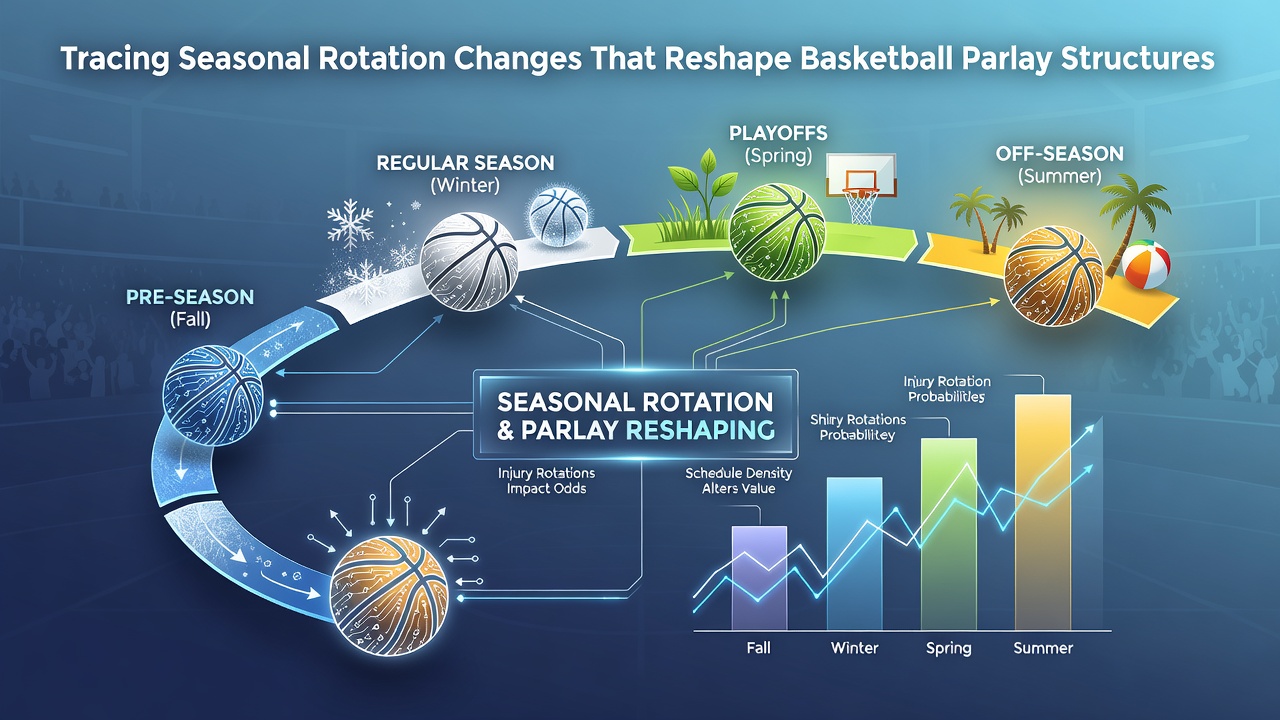
Teams across the NBA adjust rotations each season as coaching staffs respond to injuries, player development cycles, and schedule demands, and these adjustments directly alter the statistical foundations that support parlay bets. Data from the 2025-2026 campaign shows that early-season lineups often feature higher minute shares for rookies and second-year players, while mid-season tweaks typically reduce those shares once veteran rest protocols activate. Observers note that such patterns create measurable swings in team efficiency ratings, which in turn influence correlated outcomes like player points, rebounds, and assists that frequently appear together in parlay slips.
Rotation Adjustments Through the Calendar
Coaches implement different rotation philosophies depending on the month, and August 2026 marks the start of training camp preparations where initial depth charts take shape before preseason games begin. Historical figures reveal that teams averaging more than 28 minutes per game for bench players in October tend to see those numbers drop by four to six minutes once the calendar turns to December. These changes affect multiple box-score categories at once, since reduced bench minutes often correlate with higher usage rates for starters and corresponding increases in their individual stat lines. Bettors constructing parlays that combine starter points with team totals therefore encounter shifting probabilities as the season progresses.
Statistical Patterns in Early Versus Late Season
Research from sports analytics groups indicates that rotation stability peaks around the All-Star break, after which coaches experiment less with lineups and lock in preferred combinations for the playoff push. One study tracking 30 teams across five seasons found that variance in player minutes declined by 18 percent from January to March, producing more predictable outputs in categories such as three-point attempts and defensive rebound rates. Parlay structures relying on consistent three-point volume therefore gain reliability during this window, while early-season volatility can render similar combinations less dependable. Analysts at academic institutions have documented these trends through minute-distribution models that isolate coaching tendencies from injury effects.
What's notable is how load-management protocols further reshape these distributions once the schedule reaches February and March. Starters on contending clubs often see minute caps enforced, which redistributes production to role players and alters the correlation between team win totals and individual over/under lines. External data compiled by teh National Basketball Association's own tracking systems confirms that teams employing strict rest policies record lower variance in fourth-quarter scoring during the final third of the regular season.
Parlay Construction Implications
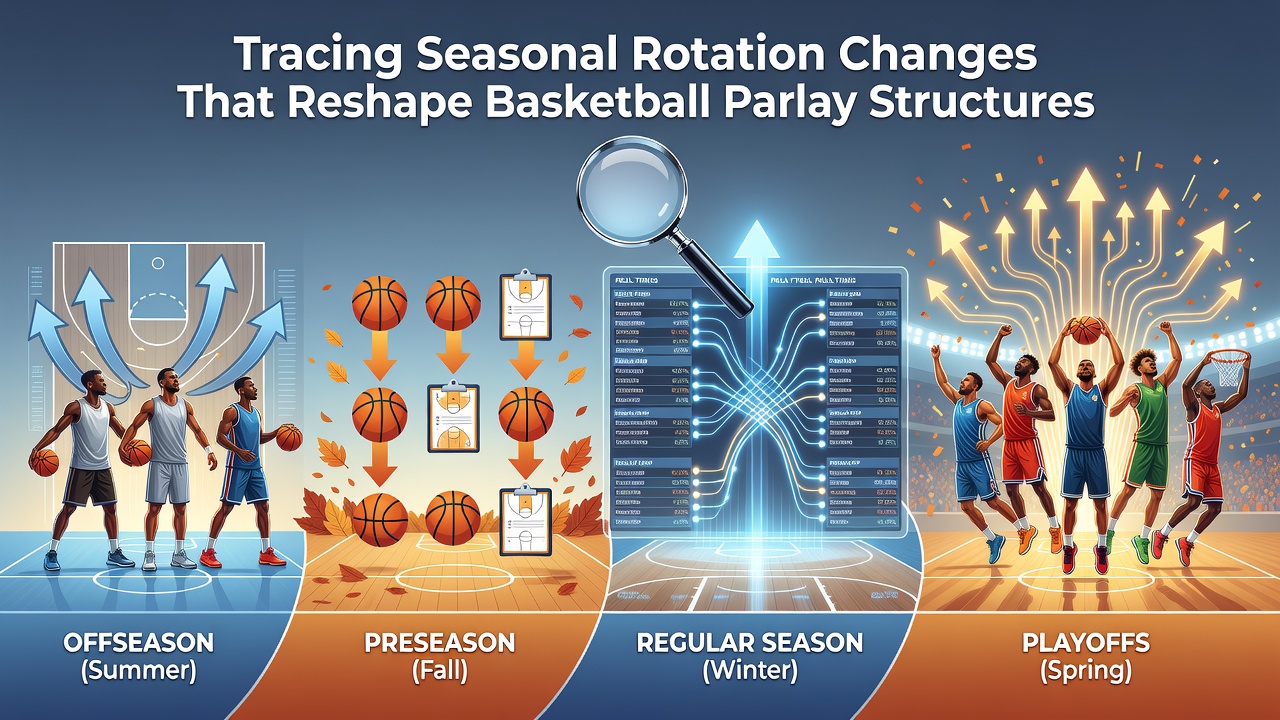
Parlay builders who track minute trends across multiple months gain an edge because correlated legs become easier to identify once rotation patterns stabilize. For instance, a parlay combining a forward's rebound total with his team's defensive rating performs differently when that forward's minutes rise above 32 per game, a threshold crossed more often after December adjustments. Figures released by league tracking partners show that such minute increases coincide with 12 percent higher rebound rates for the affected players, while team defensive efficiency improves by roughly three points per 100 possessions. These linked movements allow structured parlays to reflect actual on-court dynamics rather than static season averages.
Yet rotation changes also introduce risk when injuries force sudden shifts outside normal seasonal cycles. Data from the 2024-2025 season illustrated that teams losing a primary ball-handler for extended periods saw assist totals drop across the remaining rotation, which simultaneously depressed over lines on team assists and related player props. Bettors monitoring depth-chart updates therefore adjust their parlay selections to account for these cascading effects before lines move.
Regional and International Context
Similar rotation dynamics appear in other basketball leagues, and reports from the Australian Sports Commission highlight how NBL teams alter bench usage during the latter half of their season to manage player fatigue ahead of playoffs. Those adjustments produce comparable shifts in efficiency metrics that influence multi-leg betting products offered in that market. Meanwhile, European basketball federations have published studies showing that EuroLeague clubs reduce rotation depth during the winter months, leading to higher individual scoring outputs that mirror NBA patterns observed after the midpoint of the schedule.
Industry organizations such as the Sports Betting Alliance have compiled cross-league comparisons demonstrating that consistent tracking of rotation data improves the calibration of correlated parlay legs regardless of geographic region. Their analyses emphasize that seasonal timing remains a key variable because it influences both player availability and coaching strategy in predictable ways.
Conclusion
Seasonal rotation changes continue to reshape the statistical inputs underlying basketball parlay structures as teams respond to calendar-driven demands and competitive priorities. Observers tracking minute distributions, usage rates, and efficiency metrics across the full schedule identify clearer patterns once data from multiple months accumulates. Those patterns, when incorporated into parlay construction, align selections more closely with observed on-court behavior throughout the year.