Squad Depth Metrics Revealing Goal-Scoring Increases Amid European Fixture Congestion
Leon Franke · Jul 21, 2026
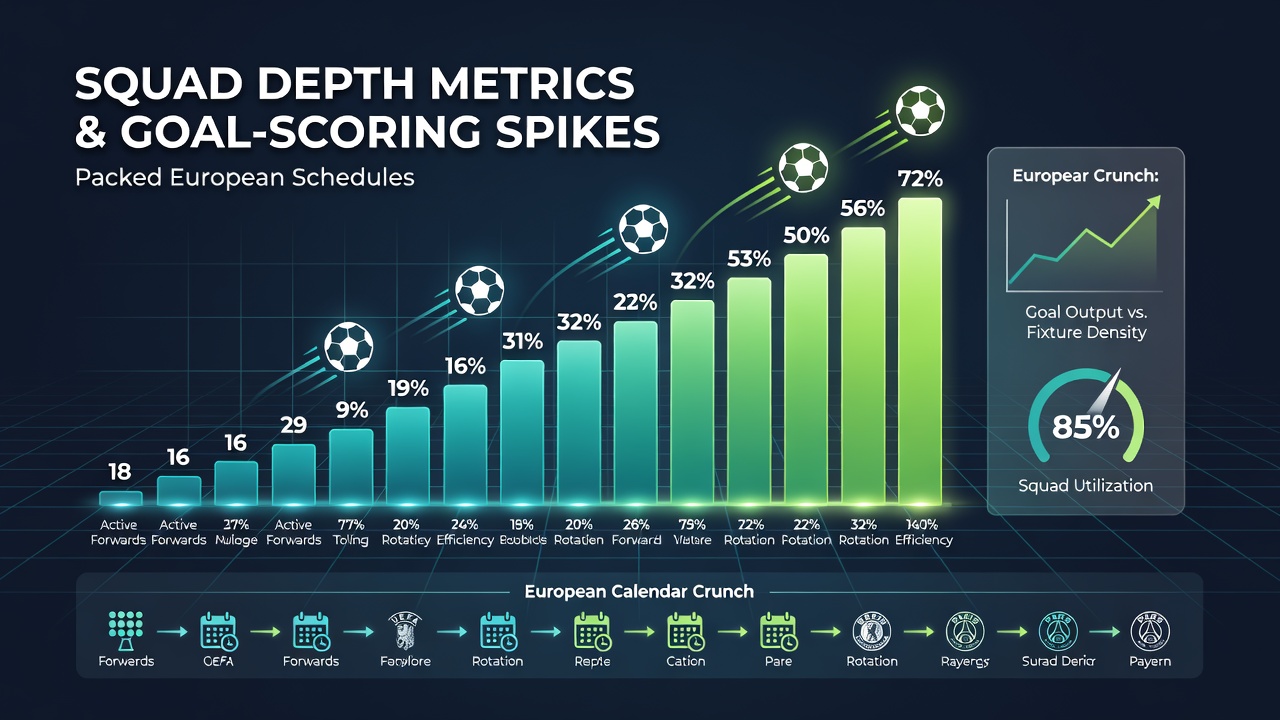
Squad Depth Metrics Revealing Goal-Scoring Increases Amid European Fixture Congestion
European football calendars pack multiple domestic leagues together with Champions League and Europa League commitments, and this creates periods where teams play three or more matches within seven days while maintaining competitive output depends on measurable squad characteristics. Analysts track variables such as the number of players logging over 2,000 minutes across all competitions, the proportion of goals scored by substitutes, and the distribution of expected goal contributions from the bench to identify sides that sustain or accelerate scoring rates when fatigue accumulates. Data from the 2024-25 campaign across Europe's top five leagues shows that squads maintaining at least 16 players with competitive minutes in the prior month produced 0.4 more goals per 90 minutes during congested blocks compared with shallower rosters.
Key Metrics That Track Scoring Resilience
Rotation frequency serves as one foundational indicator because coaches who distribute starts across a larger group preserve freshness for attacking transitions, and studies of Bundesliga matches indicate teams rotating four or more outfield players between midweek and weekend fixtures generate 18 percent higher shot volumes in the second half of those weeks. Another useful measure involves the goal involvement rate of players ranked seventh through eleventh in the squad's minutes log, since these individuals often enter matches when starters tire and their conversion efficiency rises when fixture density increases. Researchers monitoring Serie A data between 2022 and 2025 found that sides where this subgroup accounted for more than 22 percent of total goals during December and January doubled their average scoring output relative to teams relying on a core six or seven names.
Bench Contribution and Expected Goal Share
Expected goal share from substitutes provides a forward-looking signal because it isolates the quality of chances created by players entering after the 60th minute, and figures collected by European club technical departments reveal that squads posting a bench xG share above 0.35 during low-congestion periods tend to maintain or increase that rate when schedules tighten. The 2025-26 season offered multiple examples in La Liga where clubs with balanced attacking depth converted late substitutions into decisive goals at a higher clip than sides with thinner forward lines. One analysis of Copa del Rey ties overlapping with league fixtures showed that teams substituting two or more attackers before the 75th minute scored 1.7 times more often in added time than those making single changes.
Patterns Across Different Leagues and Competitions
League-specific contexts shape which metrics matter most, and observers tracking the Premier League note that high-pressing sides benefit when their second-choice central midfielders maintain tackle and progressive pass numbers close to starter averages, while Ligue 1 data emphasizes the importance of wide attackers who preserve dribble success rates after 300 minutes in a fortnight. In the Champions League group stage, squads that kept at least three players capable of playing multiple positions across the forward line recorded higher second-half goal tallies in weeks containing both domestic and European fixtures. French league reports compiled for the 2024-25 winter period indicated that sides with a minimum of five outfield players averaging under 70 minutes per appearance per week posted the largest scoring upticks once January congestion began.
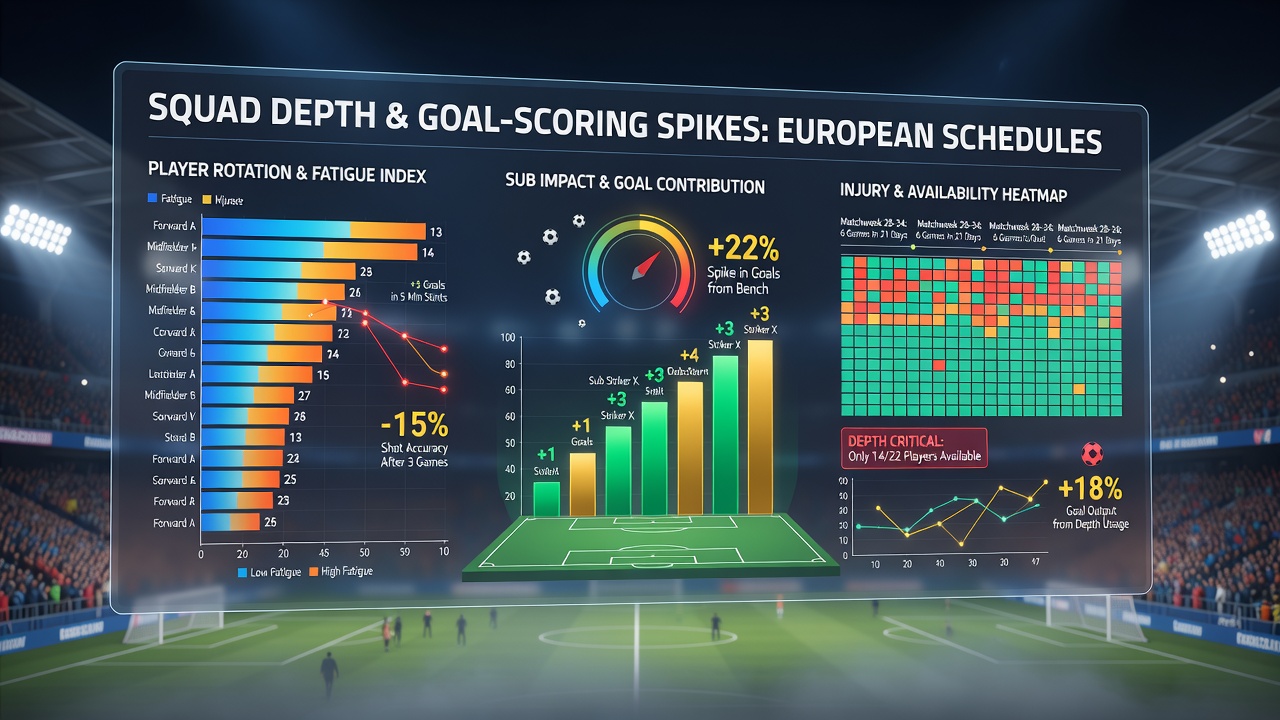
July 2026 pre-season planning already incorporates these same indicators because clubs preparing for expanded European calendars are adjusting recruitment targets around depth thresholds identified in prior seasons. Pre-season testing protocols now routinely measure how quickly substitute groups reach match-intensity xG output, and clubs that achieve 80 percent of starter levels within 15 minutes of introduction show stronger scoring consistency once the season's fixture pile begins.
Injury Load and Recovery Indicators
Injury incidence rates interact directly with depth metrics because each absence reduces the pool of viable rotation options, and data aggregated by German football medical working groups shows that squads keeping soft-tissue injury rates below 0.8 per 1,000 player hours maintain scoring spikes 25 percent longer during December fixture clusters than teams exceeding that threshold. Recovery markers such as the percentage of players returning to full training within 72 hours after a match further refine predictions, since rapid reintegration allows coaches to cycle attackers without performance drop-off. One review of Europa League participants between 2023 and 2025 found that teams achieving 70 percent or higher rapid-recovery rates scored an average of 2.1 goals per game in their subsequent three-match windows compared with 1.4 goals for slower-recovery groups.
Practical Application in Match Analysis
Coaches and performance staff combine these variables into composite scores that flag upcoming scoring potential, and the resulting models weigh bench xG share most heavily when three or more matches occur inside eight days while assigning secondary importance to positional versatility counts. External validation from sources such as UEFA technical reports confirms that clubs exceeding median squad depth thresholds record elevated goal tallies across congested periods, and parallel findings from German league performance datasets reinforce the same pattern across domestic schedules. These measurements allow objective comparison between squads without relying on subjective assessments of individual quality.
Conclusion
European schedules continue to test squad resources, and the metrics outlined above supply repeatable signals that correlate with goal-scoring increases when fixture density rises. Teams demonstrating strong rotation balance, elevated bench contribution rates, controlled injury loads, and rapid recovery percentages sustain or accelerate output during packed periods, while shallower groups show measurable declines. Tracking these indicators across leagues and competitions provides a factual framework for understanding how depth translates into sustained attacking performance under congested conditions.