Squad Rebuilds Shift the Landscape of Analytical Models Across European Leagues
Freya Schwarz · Jul 23, 2026
Squad Rebuilds Shift the Landscape of Analytical Models Across European Leagues
Transfer activity in July 2026 continues to reshape how statistical platforms update team projections for leagues such as the Premier League, La Liga, Serie A, Bundesliga and Ligue 1, and analysts track these movements through adjusted metrics that include expected goals, progressive passes and defensive duels won per 90 minutes.
Platforms recalibrate algorithms once new signings complete medical checks, because each incoming player alters squad depth charts and rotation possibilities that feed directly into simulation engines used for match outcome forecasts.
Player Valuation Updates and Model Recalibration
Statistical providers integrate fresh performance baselines drawn from previous seasons at different clubs, which means a striker arriving from Serie A carries an adjusted expected goals rate that reflects both his historical output and the tactical system he joins, while defenders moving across borders bring new pressing intensity figures that modify collective team pressing models.
These recalibrations occur rapidly because domestic leagues publish updated squad lists by mid-July, allowing data teams to rerun Monte Carlo simulations that project final league tables with the revised personnel included.
Impact on Expected Goals and Possession Models
Expected goals calculations shift when a creative midfielder replaces an established starter, since the new arrival’s pass completion rate into the final third changes the team’s overall build-up efficiency rating, and analysts incorporate these figures alongside set-piece specialists who add weighted contributions to both attacking and defensive simulations.
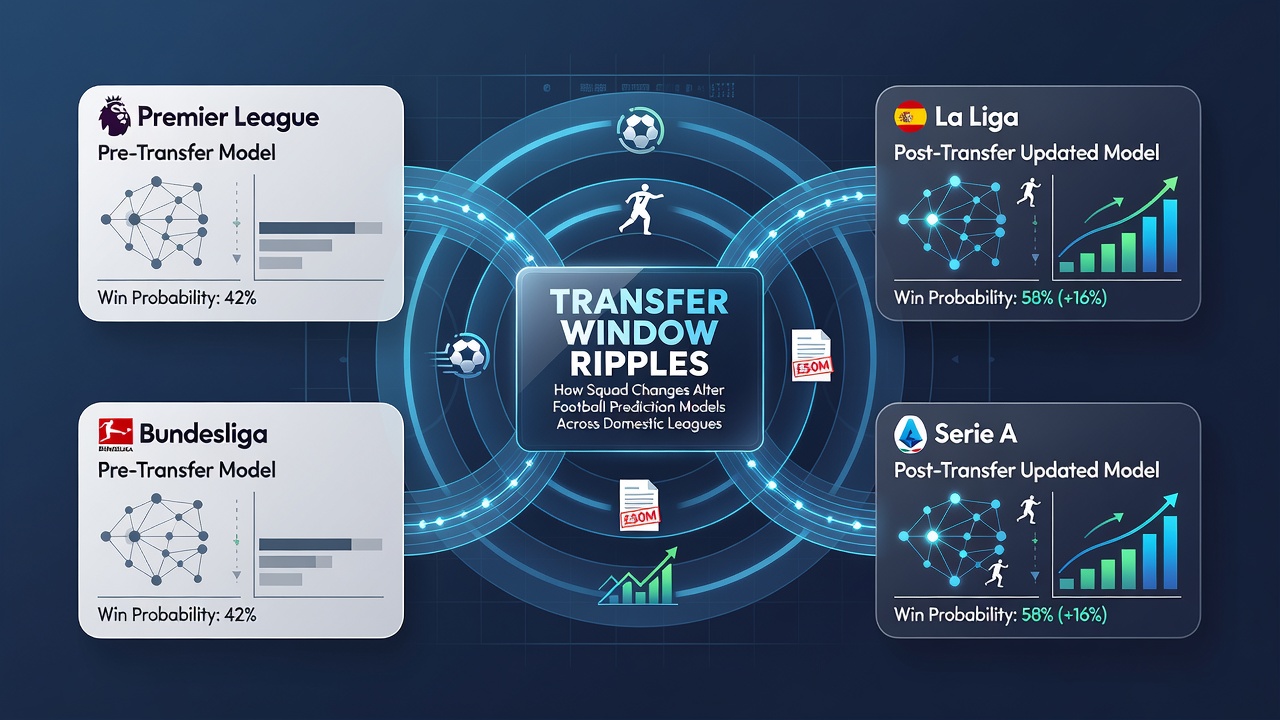
Possession retention percentages also receive fresh inputs when full-backs with high progressive carry numbers enter a squad, because such additions increase the probability of sustained attacks that models translate into higher chance creation estimates across an entire campaign.
League-Specific Adjustments in Domestic Competitions
Bundesliga models place extra emphasis on high-line defensive metrics when new centre-backs arrive, whereas Serie A projections weigh aerial duel success rates more heavily due to traditional tactical preferences, and these league-specific weightings ensure that squad changes produce differentiated ripple effects depending on the competition.
La Liga platforms adjust for technical skill distributions after midfield reinforcements join, because passing accuracy under pressure influences both short-term match predictions and longer-term title probabilities that feed into accumulator-style forecasting tools.
Data Integration from Multiple Sources
Research teams combine scouting reports with GPS tracking data released by clubs, while academic studies from institutions such as La Trobe University supply additional context on workload management that affects injury probability curves used in season-long simulations.
Observers note that UEFA technical reports provide comparative benchmarks across European competitions, allowing domestic model builders to align their frameworks with continental trends without duplicating inputs already captured by national federations.
Rotation and Fixture Congestion Effects
Squad depth alterations influence rotation patterns during congested periods, since added options at key positions reduce fatigue accumulation rates that models convert into performance decay estimates, and these calculations prove particularly relevant for Champions League participants who face additional midweek fixtures.
Prediction engines therefore rerun weekly projections after each transfer confirmation, incorporating updated bench strength values that shift overperformance or underperformance likelihoods for individual matches.
Conclusion
Transfer windows in 2026 demonstrate how personnel movements propagate through multiple layers of football analytics, from individual player ratings to full league table simulations, and the process requires continuous data ingestion from clubs, federations and independent research groups to maintain accuracy across domestic competitions.