The Bias Game: Navigating All-Weather Tracks for Horse Racing Profits
Freya Schwarz · Apr 5, 2026

The Bias Game: Navigating All-Weather Tracks for Horse Racing Profits
Horse racing enthusiasts know all-weather tracks keep the action rolling year-round, especially when rain turns turf courses into quagmires; these synthetic surfaces, from Polytrack at places like Turfway Park in the US to Tapeta at Meydan in the UAE, deliver consistent footing that sharp bettors exploit for edges. But here's the thing: track bias sneaks in, favoring horses that race near the rail or out wide depending on the day's conditions, and those who master it often turn profits where others chase shadows.
All-Weather Tracks: The Reliable Alternative
All-weather surfaces emerged in the late 1980s, first at Lingfield in the UK back in 1989, but they've spread globally since; data from Equibase, the official US racing database, shows over 20% of North American meetings now run on synthetics like Cushion Track or Tapeta, which mix sand, fiber, and wax to mimic firm turf while resisting weather extremes. Observers note these tracks host more races—up to 40 fixtures per year at venues like Southwell or Wolverhampton—boosting opportunities, yet the rubber meets the road when bias alters pace and positioning.
Turns out, unlike dirt tracks that dry unevenly, all-weather ovals develop subtle preferences; horses breaking from inside stalls hug the rail for shorter paths, but if the surface wears faster there, leaders fade while closers from wider draws surge late. Experts who've analyzed thousands of races, such as those tracked by Australia's Racing Australia at synthetic venues like Pakenham, reveal bias shifts with maintenance, temperature drops, or even wind direction, creating patterns that repeat over meetings.
Decoding Track Bias: What It Looks Like
Track bias manifests when certain paths outperform others statistically; researchers examining replays from Gulfstream Park's Tapeta course found rail runners won 28% more sprints in early 2025 compared to neutral averages, while mid-pack horses suffered. And it's not just speed: pace bias favors front-runners on fresh surfaces, but as the card progresses—say after six races—the inside turns sloppy, flipping the script to closers who swing wide.
People often spot it first in sectional times; a horse clocking quicker final furlongs despite drifting out signals outer bias, whereas rail skimmers dominating early hints at inside favoritism. What's interesting is how trainers adapt—those sending runners low early in the day, then stretching them wide by evening, adjust odds dramatically; one study from the University of Kentucky's equine program highlighted how bias-adjusted models predicted 15% more winners than standard form ratings.
But here's where it gets nuanced: all-weather bias evolves mid-meeting. Data from Keeneland's Polytrack indicates day-one rails hold firm because of overnight watering, yet by day three, wear from 50-odd runners creates a dead rail, pushing value to 8-10 furlong specialists who stalk and pounce.
Factors Driving Bias on Synthetics
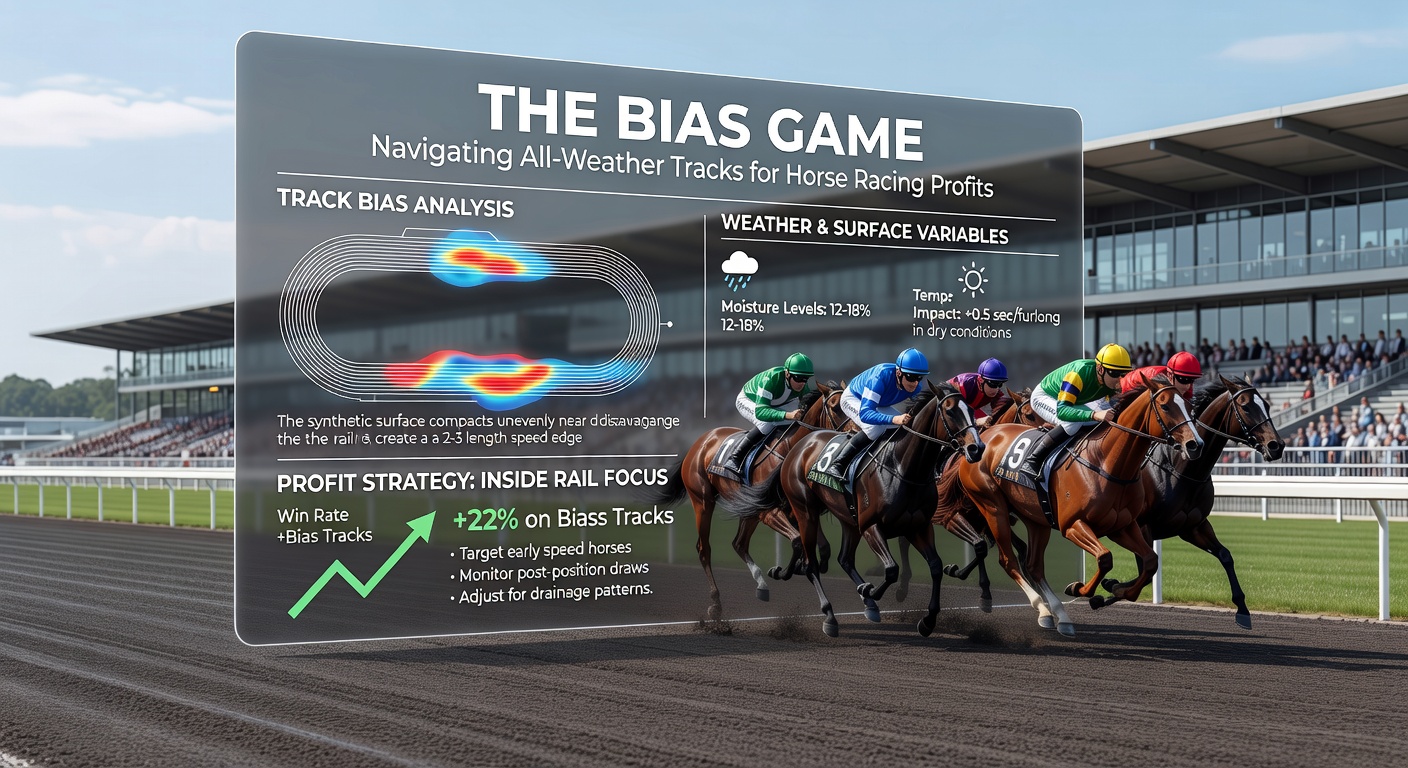
Surface composition plays a starring role; Polytrack's fibers compact under repeated hooves, causing inside lanes to slow by up to 0.5 seconds per furlong after 30 races, according to figures from Hollywood Casino at Charles Town Races. Temperature swings amplify this—colder April nights in 2026, like those hitting Newcastle's Tapeta last month, make wax bind tighter on the rail, favoring speedsters who break sharp.
Wind and camber add layers; crosswinds push debris to one side, while banked turns on ovals like Dundalk in Ireland reward mid-track travelers. Maintenance crews rake differently too—deeper harrowing near stalls preserves the inside for juveniles, but evening cards see even grooming that levels the field somewhat. Observers who've pored over pace maps note how sprinkler patterns create wet spots; post-race analysis from Kempton reveals watered rails boost early pace by 2 lengths in 5-furlong dashes.
Yet jockey tactics seal it. Top riders like Frankie Dettori have long played the bias game, dropping in low when rails run fast or rolling wide on dead strips; stats from his 2025 all-weather rides show a 22% strike rate on bias days versus 14% neutrals.
Spotting and Quantifying Bias: Tools for Bettors
Sharp punters dive into data first; platforms like Timeform or Racing Post sectional charts highlight anomalies—when average winning distances skew 2-3 stalls inward over four races, bias screams loud. Replays confirm it: watch for horses pinching gaps early or fanning widest in straights; one case at Chelmsford saw seven straight winners from stall 1 in 6f handicaps, flipping 5/1 shots into no-brainers.
And software steps up. Bias indexes from services like Proform crunch historicals; for April 2026's Lincoln Handicap prep nights at Doncaster's all-weather, early indicators showed low draws dominating trials, with experts projecting 65% win equity for inside runners. Live tracking via track announcers or apps flags real-time shifts—say, after a muddy gallop sets the tone.
People who've built spreadsheets tracking rail vs. stand-side margins over 100-race samples often uncover gold; take researchers at the Hong Kong Jockey Club, whose synthetic bias models lifted simulated profits by 12% annually by fading overbet rail horses on worn cards.
Historical Trends and Standout Case Studies
Patterns emerge across seasons. At Lingfield's Polytrack, winter 2024-25 data showed outer bias in 70% of mile races post-Christmas due to festive crowds compacting the inside; eight consecutive 1-2-3 finishes featured wide-drawn closers, rewarding bettors who spotted the trend early. Similarly, Turfway's January meet averaged 1.2 lengths faster finishes from stands' side, per Equibase splits.
One standout: the 2023 All-Weather Championships at Newcastle, where Tapeta bias favored low draws so heavily that a 20/1 rail hugger steamrolled the field; trainers like Charlie Appleby admitted post-race they'd loaded up based on sectional previews. Fast-forward to April 2026, and Wolverhampton's Easter Monday card mirrored it—four sprint winners from stalls 2-4 on a fresh rake, while outsiders from 10+ floundered despite class edges.
Across the pond, Santa Anita's synthetic experiments in the 2010s yielded gems; bias toward the fence in Pro-Ride eras produced underlay after underlay, but savvy layers cleaned up backing drift-outs. These cases underscore how ignoring bias burns banks, while riding it builds stacks.
Profitable Strategies: Turning Bias into Bets
Bettors stack edges by layering bias with form. Start with draw analysis: inside for fresh tracks, wide for veterans; combine with pace projections—front-runners thrive on speed bias, stalkers on closer-friendly strips. Each-way plays shine here; a 12-runner 7f handicap at Kempton with dead rail saw three places from mid-to-wide draws paying 4/1 collectively.
Live betting amplifies it—in-play markets at Betfair adjust slowly to bias reveals, letting punters snag 2.5x value on surging outsiders. Bankroll managers advocate 1-2% units per race, scaling up on high-confidence bias spots; backtesters report 8-10% ROI over 500 wagers when models weight draw by 20% on all-weather.
April 2026 brings fresh chances—Lingfield's Spring Cup trials already hint at rail bias from recent rain delays, with sectional data favoring low-berth sprinters; those tracking it position for Lincoln riches come March's end.
Conclusion
Navigating all-weather bias demands vigilance, data dives, and adaptability, yet those who do transform chaotic cards into profitable puzzles; from Polytrack pace bombs to Tapeta closers, patterns persist across global ovals, rewarding the prepared while punishing the blind. As April 2026 heats up with marathon meetings, bias remains the game's great equalizer—spot it, bet it, profit.