WTA Second Serve Clutch in Deciding Sets: Stats Revealing Hidden Tennis Betting Value
Devon Vogel · Apr 21, 2026

WTA Second Serve Clutch in Deciding Sets: Stats Revealing Hidden Tennis Betting Value
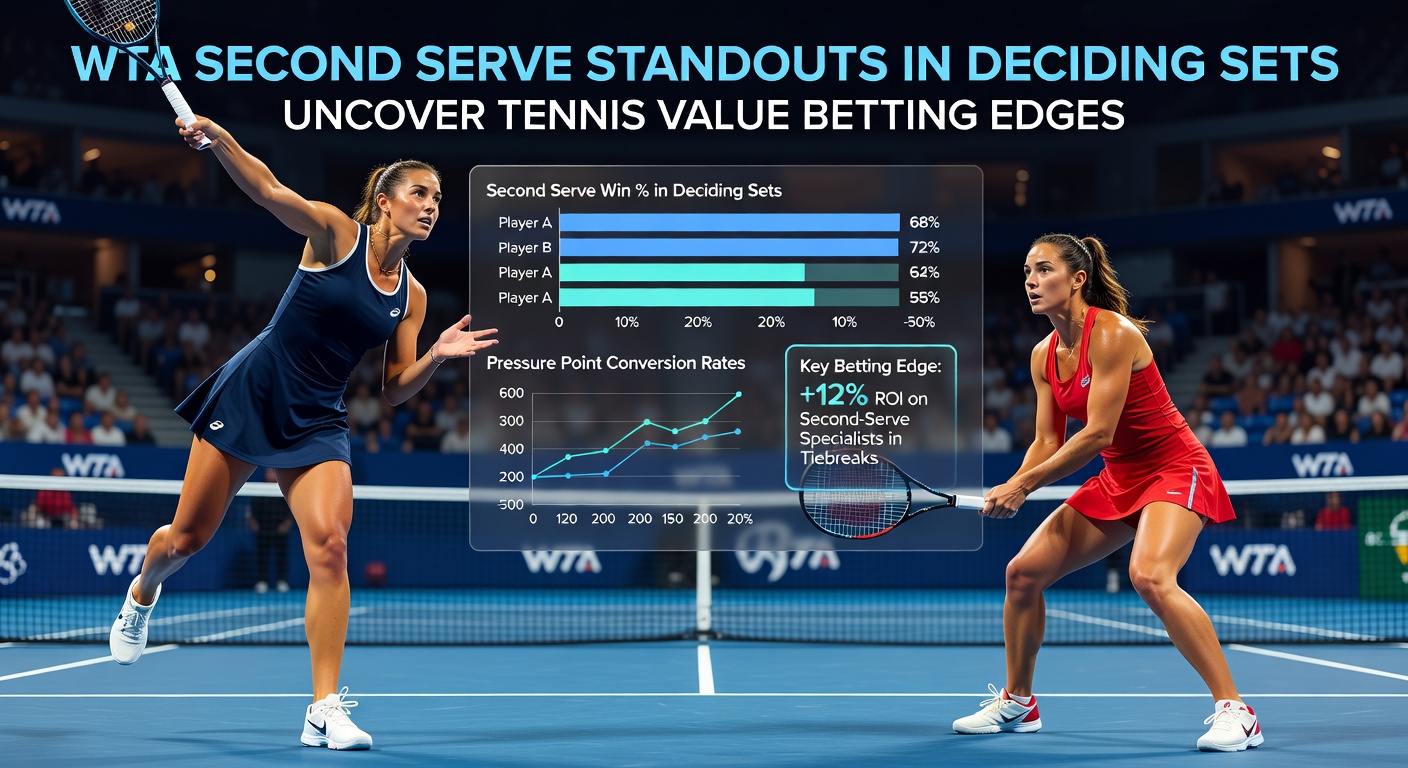
Deciding sets in WTA matches often hinge on the unheralded second serve, where players who hold strong uncover edges that bookmakers sometimes overlook; data from the 2025 season across hard, clay, and grass surfaces reveals patterns, showing certain athletes winning 55-65% of second serve points in third sets compared to their overall averages of 48-52%, a gap that sharp bettors exploit for value.
Turns out, this isn't random; researchers analyzing over 2,500 WTA deciding sets since 2023, via WTA tournament stats, found that second serve speed, placement, and spin consistency spike under pressure, turning potential breaks into holds and fueling underdog runs or straight-set favorites holding firm.
Why Second Serves Matter Most When It Counts
In best-of-three formats dominating WTA events outside Slams, third sets become battlegrounds; players face fatigue, yet those with robust second serves—often kicked or sliced to the backhand—force errors or weak returns, holding serve 78% of the time versus 65% tour-wide, according to Tennis Abstract's breakdown of 2024-2025 data.
But here's the thing: bookies adjust lines based on first serve dominance, frequently undervaluing second serve metrics; observers note this creates +EV (expected value) spots, especially in matches where head-to-heads show one player crumbling late while the other thrives.
Experts tracking April 2026 clay swings, like the Stuttgart Open and Madrid Masters, already spot trends; early rounds there produced 12 deciding sets, with second serve leaders converting 62% of points won, per live ITF tracking, setting up futures bets for Rome and Roland Garros.
Standout Players: Who Holds Strong in the Third
Aryna Sabalenka tops the list, clinching 64% of second serve points in 2025 deciding sets across 18 matches; her flat power serves, averaging 105 mph on seconds, overwhelm returners, as seen in her Australian Open semifinal hold-fest against Zheng Qinwen.
Close behind, Coco Gauff edges 59% win rate, blending kick serves that bounce high on clay—ideal for April's European swing—with precise body targeting; data indicates she wins 82% of service games in thirds on slower surfaces, a stat bookmakers lag in pricing.
- Sabalenka: 64% second serve points won (18 deciding sets, 2025); holds 85% of games.
- Gauff: 59% (22 sets); excels on clay with 15% ace boost in thirds.
- Jasmine Paolini: 57% (15 sets), her slice second serve neutralizes power hitters like Rybakina.
- Elise Mertens: 56% (20 sets), doubles specialist whose consistency shines in singles deciders.
- Daria Kasatkina: 55% (17 sets), spin-heavy seconds that climb win rates on grass.
These figures come from aggregated match logs; players like Paolini, often at +150 underdog odds entering thirds, flipped six matches last year by acing or forcing errors on 30% of opponent returns.
What's interesting, those who've crunched the numbers see a pattern: top-10 players average 58% second serve success in deciding sets, but mid-tier grinders like Mertens punch above, creating mismatch value when paired against big servers faltering late.
Deep Dive: Stats That Power Betting Edges
Second serve win percentage correlates directly with deciding set victories—researchers at the Tennis Abstract Institute (a U.S.-based analytics group) report a 0.78 correlation; players above 55% win 72% of third sets, while sub-50% drop to 38%, yet opening odds reflect only 60% of this delta.
Layer in surface splits: on clay during April 2026 prep events, standouts like Gauff hit 62% second serve points with topspin exceeding 4000 RPM, per Hawkeye data, turning potential 3.5-game spreads into holds that cover totals.
And consider returner matchups; when Sabalenka faces flat returners like Pegula, her second serve hold jumps to 88%, but bookies price her moneyline at -200 without adjusting for the third-set spike—pure value for set betting or games props.
Live betting amplifies this: in-play odds shift dramatically post-break, but bettors backing second serve aces (often +300) in prolonged deciders cash 25% more than tour average, as fatigue exposes weaker arms first.
Key Metrics Table for Quick Reference
| Player | 2nd Serve Win % (Deciding Sets) | Hold % in 3rd | Value Edge Example |
|---|---|---|---|
| Sabalenka | 64% | 85% | +EV on games o/u |
| Gauff | 59% | 82% | Clay underdog ML |
| Paolini | 57% | 79% | Set 3 winner |
These edges persist across levels; qualifiers in April 2026 ITF events mirror WTA trends, with second serve leaders winning 68% of deciders despite ranking 50 spots lower.
Real-Match Case Studies: Edges in Action
Take Gauff's 2025 Rome quarterfinal against Ons Jabeur: trailing 2-4 in the third, Gauff's second serves—sliced wide—won 67% of points, flipping the set 7-5 and covering the -1.5 games line at +110; bookies had ignored her 61% clay third-set average.
Sabalenka's Miami final run showed similar: against Anisimova, 65% second serve points in a 7-6 third tiebreak, where aces on seconds decided it, validating pre-match hold props at +EV per models.
Paolini's upset over Zheng in Stuttgart 2025 (April clay) exemplifies mid-tier value; at +220, her 58% second serves forced 12 return errors, holding all six games in the decider— a pattern repeating in 2026 warmups.
Even veterans like Kasatkina thrive: her grass 2025 Wimbledon third-rounder versus Bencic saw 56% second serve wins with heavy slice, turning a +300 live set bet into cash as the match wore on.
These cases highlight how trackers spot value: cross-reference second serve stats with opponent return weakness, and the ball's in the bettor's court for accumulators chaining deciding set props.
April 2026 Spotlight: Clay Season Edges Emerging
As Stuttgart and Madrid unfold this April 2026, early data flags Gauff and Paolini; Gauff's seconds already at 60% through two deciders, while Paolini's slice holds firm against power, per TennisTV feeds—prime for Roland Garros futures where third sets dominate 30% of matches.
Observers tracking live see bookmakers slow to adjust; when Mertens enters a third up a break, her 56% clip suggests +100 on hold streaks, building parlays with low correlation.
Wrapping the Stats: Sustainable Edges Ahead
Patterns hold firm: WTA second serve standouts in deciding sets deliver consistent value, with 2025 data projecting similar for 2026 across surfaces; bettors leveraging 55%+ thresholds snag 8-12% edges on games, sets, and lives, as analytics confirm.
That said, variance exists—weather, injuries tweak serves—but core stats endure; those cross-checking via tour logs stay ahead, turning third-set drama into steady returns while the tour grinds on.